Introduction
This is the first part of an account of the editions of the engravings of Turner’s Rivers of France. The sixty-one plates form one of the most beautiful, extensive and important of Turner’s published topographical series. Many scholars have been interested in the topic, researching Turner’s tours, sketches and watercolours in detail. Here, however, we propose that the published editions might in themselves be thought of as the primary intended works of art, and furthermore be counted among the culminating contributions to Romantic consciousness.
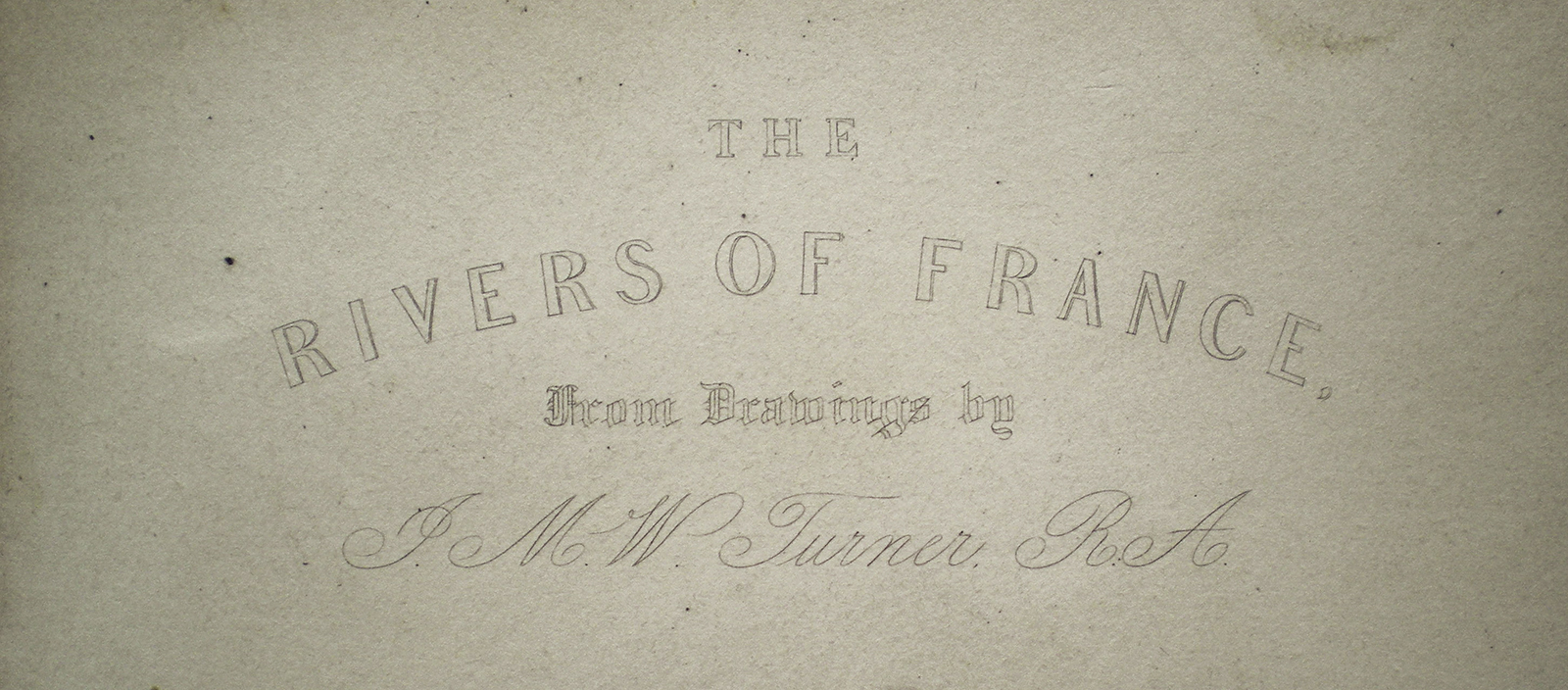
The project was conceived by the engraver and entrepreneur Charles Heath. He had already worked with Turner on various projects including Picturesque Views in England and Wales and The Keepsake. Both projects continued alongside the Rivers of France. In the later 1820s Heath commissioned a series of watercolours from the artist, engaged the best engravers that he knew, and worked in partnership with the publishers Longman & Co, and also the printsellers Moon, Boys and Graves, to bring the project to fruition. Heath’s initial idea was to produce numerous volumes devoted to the Rivers of Europe but in the end coverage extended only to the Loire and Seine.
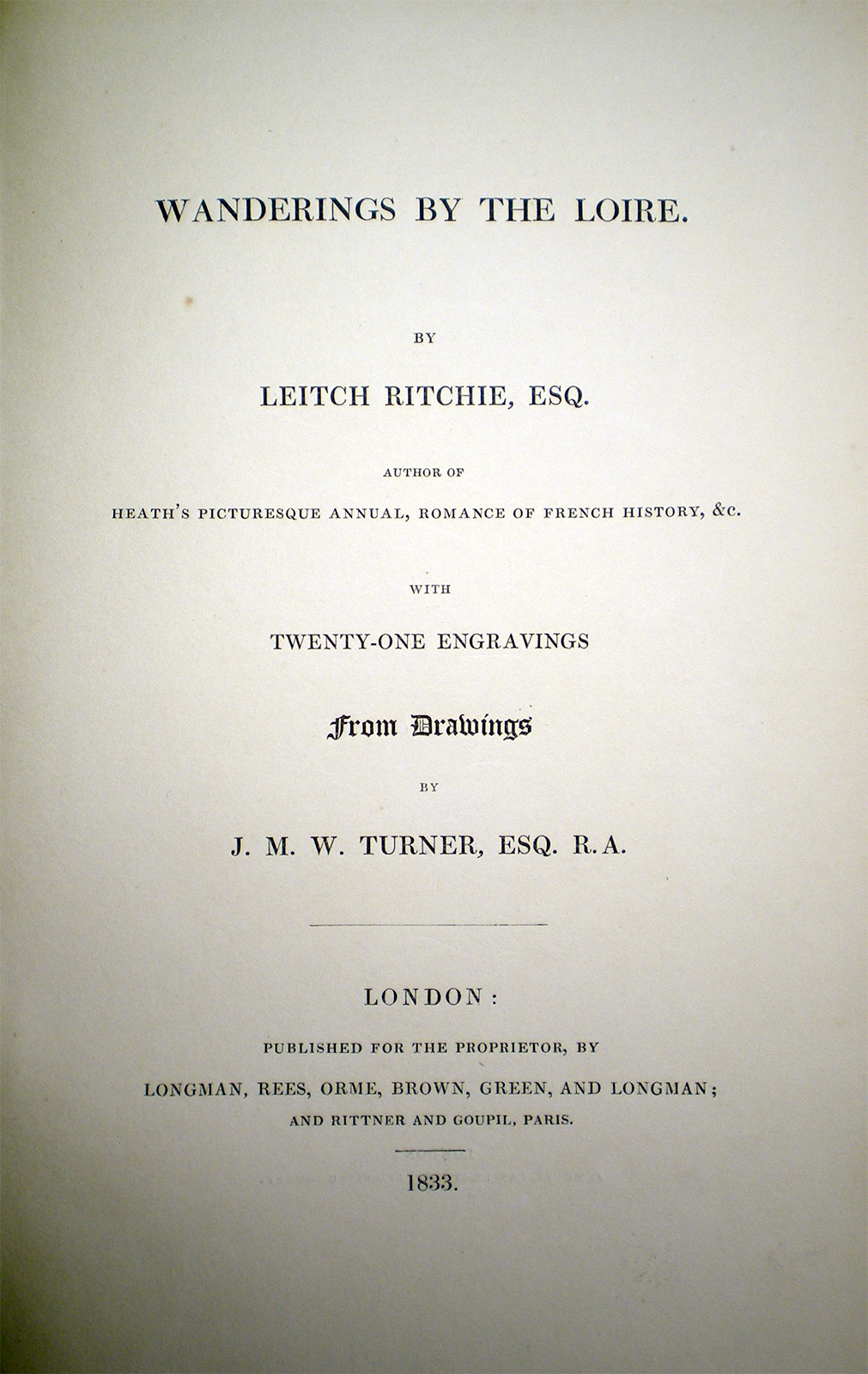
The first edition took the form of three volumes for 1833, 1834 and 1835 under the title ‘Turner’s Annual Tour’. The first volume was dedicated to the Loire, and the second and third to the Seine, and each volume was accompanied by a novel length text by Leitch Ritchie, purporting to relate a tour that readers might believe was made in the company of the artists. In parallel, Moon, Boys and Graves issued annual editions of proof impressions that were sold as unbound sets housed in portfolios.
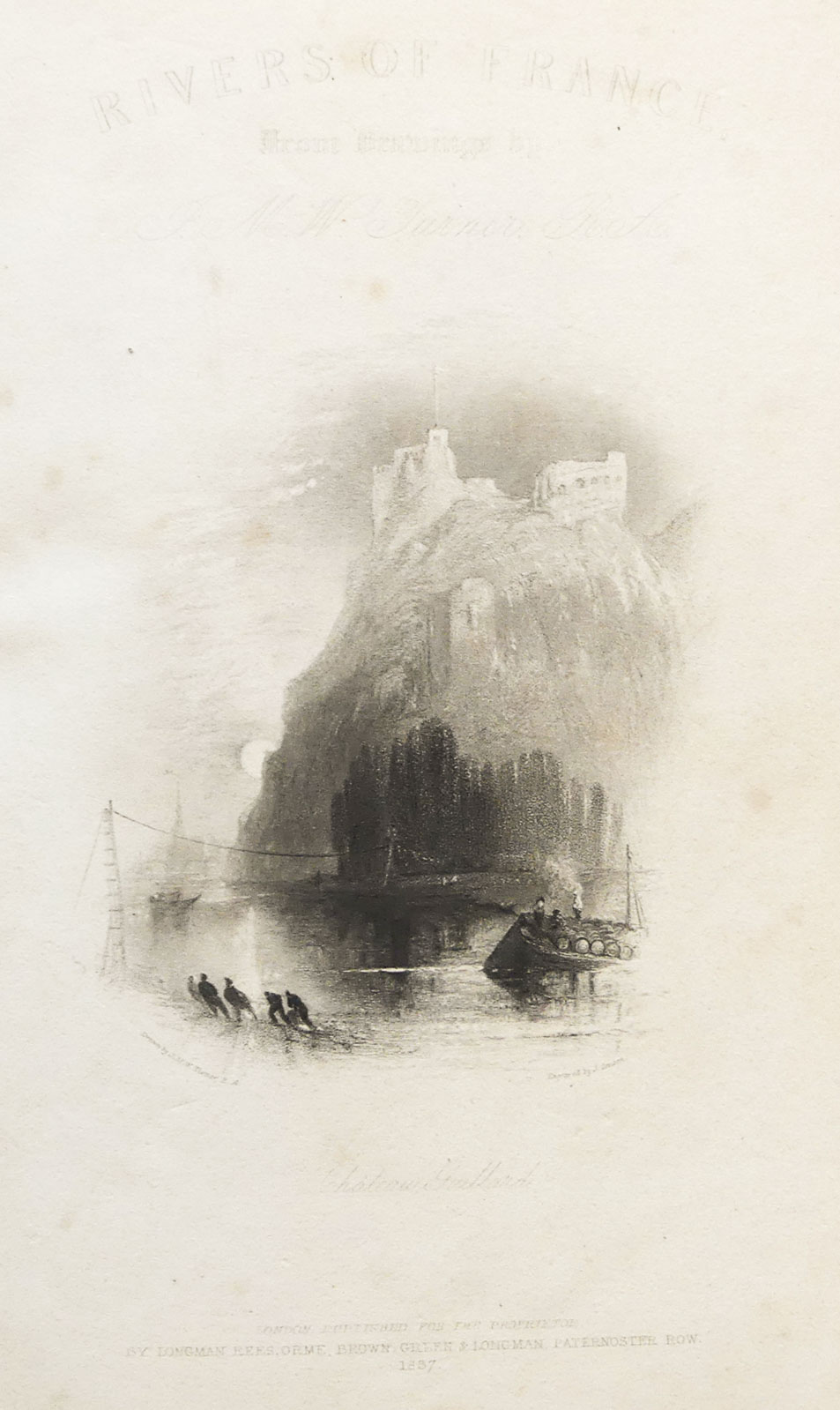
The plates were reprinted in several editions over the next sixty years. From 1835 they were issued under the title of ‘Rivers of France’ with the imprint of the London publisher J McCormick. This appeared sequentially in monthly parts, each containing three plates and a single sheet of commentary by Leitch Ritchie for each plate and was completed in 1837.

In 1853 the publisher H.G.Bohn printed a new edition of the plates under the title of ‘Liber Fluviorum, or Rivers Scenery of France’. This edition does not include the vignettes of Nantes or Light Towers of La Heve that appeared in previous editions. Instead these are replace by two plates, Saumur and Havre that first appeared first in The Keepsake. The plates are accompanied by the entire Leith Ritchie text from Turner’s Annual Tour, but also, in addition, a biographical sketch by Alaric A Watts. This was one of the first accounts of the artist to appear following his death in 1851. This issue enjoyed a second edition in 1857.
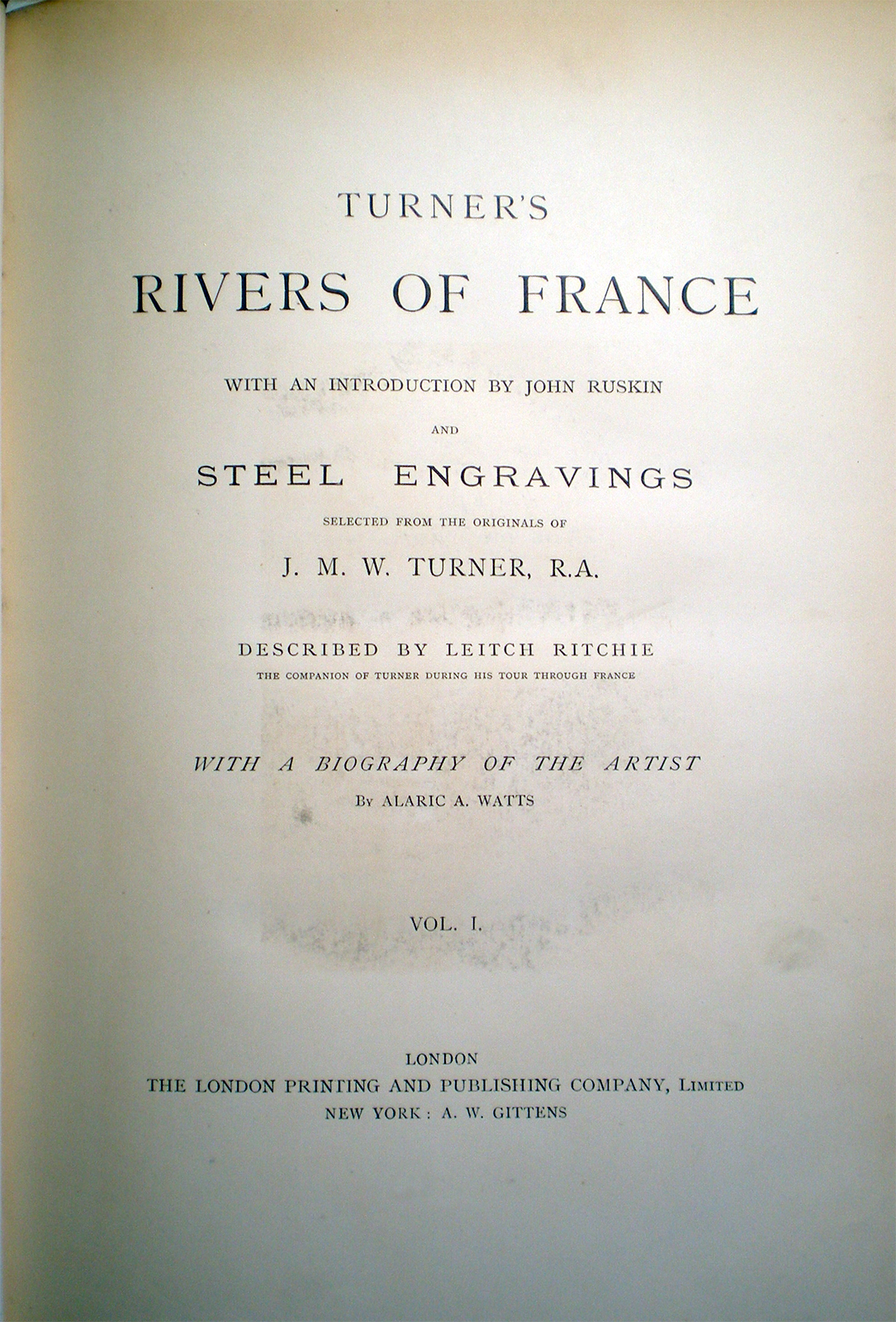
Next, The London Printing and Publishing Company produced a new book edition under the title of ‘Turner’s Rivers of France’. This is undated but must have been printed before the company was wound up in 1882. This included the full Leitch Ritchie text from Turner’s Annual Tour, plus the Alaric A Watts biography, plus a short introduction by John Ruskin. The same material was also bound up by the publishers J.Virtue & Co., possibly from remaindered stock.
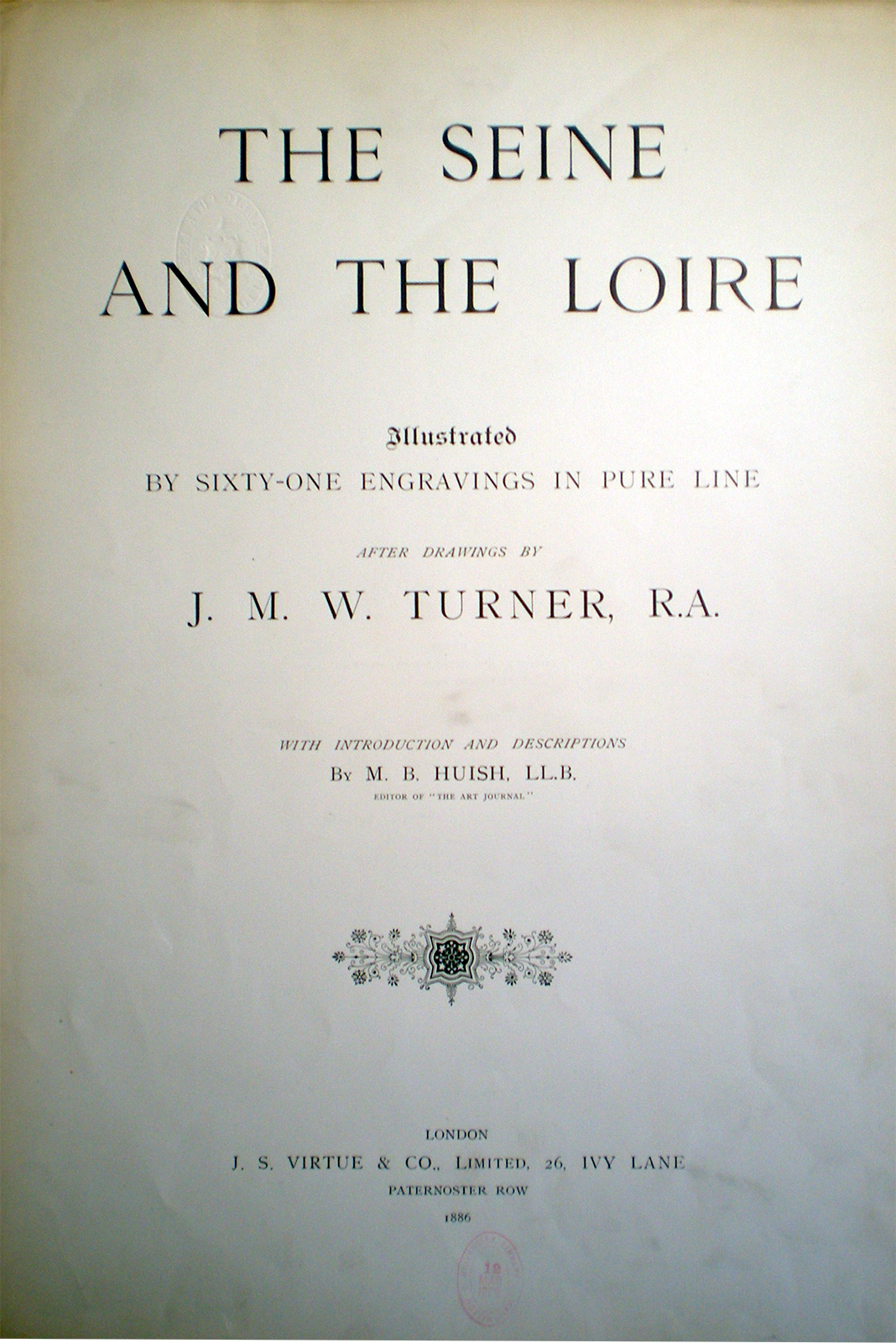
In 1886 Virtue & Co printed an entirely new edition from the plates, in the form of a portfolio edition of proofs under the title of ‘The Seine and the Loire’. This includes an introduction by Marcus B Huish, plus single page commentaries to each plate by the same author. This was subsequently issued in book form in 1890 and 1895.
We will examine each of these productions in due course under their respective published titles, but given the potential for confusion, it seems best to refer to the series as a whole as ‘Turner’s Rivers of France’, as previous scholars also seem to have found most straightforward.

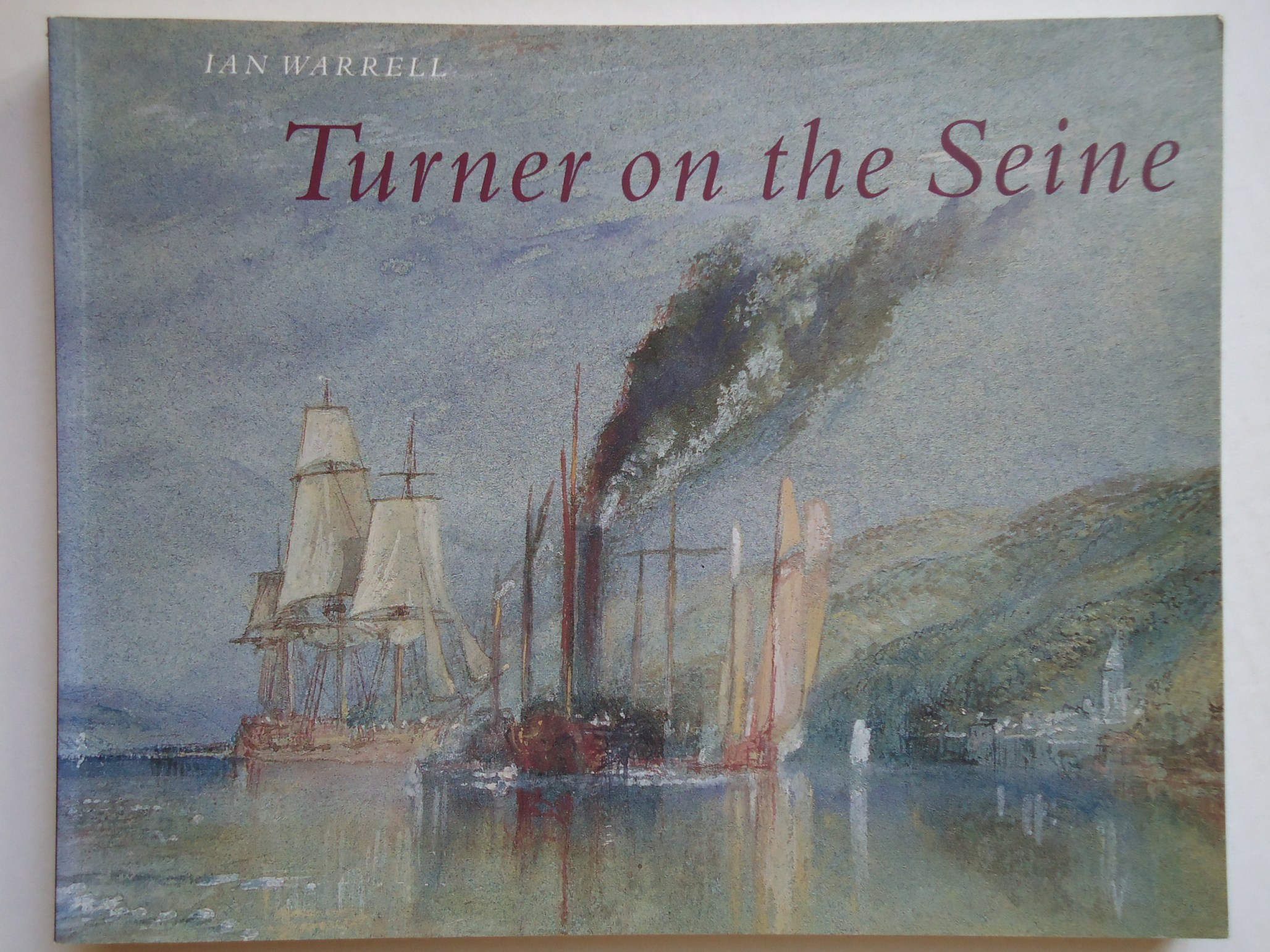
In developing his watercolours for engraving, Turner drew on material from visits to France over eleven years 1821-1832, as well as his first visit to Paris in 1802. Over that period he filled several sketchbooks with hundreds of pencil sketches, but besides that made an extended series of sketches on blue paper. These are in pencil, pen and ink, and watercolour, and various combinations of those mediums. Sixty-one watercolours were engraved, but the total number of produced exceeds that by a factor of two or three. Many subjects remain to be identified. Nicholas Alfrey kindled modern interest in 1977 with his unpublished MA report at the University of London, which was much further developed in the compendious catalogue of the exhibition Turner en France at the Centre Cultural du Marais in Paris in 1981. Su8nsequently, the context, development, tours and sketches were comprehensively surveyed by Ian Warrell in his two books Turner on the Loire, Tate, 1997 and Turner on the Seine, Tate, 1999. These remain the definitive treatments of the topic area.

The foundational catalogue of the engravings is W.G.Rawlinson, The Engraved Work of J.M.W.Turner RA, 2 vols 1908-13, vol.2, p.256 ff. There is scope now for revision and expansion of this account, but nonetheless it remains unsurpassed as a listing of the individual subjects, their various states and editions, and as an overview of the project. If criticism might be made it is that Rawlinson is not especially interested in the book forms and overly favours the earliest and rarer states. His account might usefully be complemented with the account of the project in Luke Herrmann’s book Turner Prints (Phaidon, 1990). Neither, however, it seems to me, sufficiently acknowledges that the primary intended outcomes of the project were the books.
The majority of the sketches and drawings are in the Turner Bequest at the Tate and the online catalogue of the Turner Bequest is the primary resource. The Tate’s material draws heavily on Warrell and the entry points to the material in the catalogue are rather disparate and a comprehensive survey of the material requires some perseverance.
The tour of 1826 and many of the watercolours are introduced here:
A visit to Normandy in c,1829 is introduced here:
Northern France in 1832 is introduced here;
A miscellany of French material, including some related to the Rivers of France, is introduced here:
The Seine watercolours are introduced here
and there is an introduction to the French Rivers prints under various individual subjects, for example, here;
Many of the engraved watercolour sketches of Loire subjects were sold off after publication and eventually were acquired by John Ruskin. They were given by him in 1861 to the University of Oxford and are kept at the Ashmolean Museum. Thy may be accessed online here.
The object of the present study, however, is to concentrate on the various forms in which the engravings were published. We will consider and illustrate the differing editions, and document them so far as is possible.
One invaluable resource, which was not available to previous scholars, is the online British Newspaper Archive https://www.britishnewspaperarchive.co.uk/. This offers powerful search and ordering functions and can be made to yield a wealth of information about the published formats and dates. It also allows use to find the widest spectrum of reviews, and these offer thought-provoking insights into the contexts on which the various editions were floated over period of more than sixty years. In addition we can draw upon the publication archives and ledgers of the original publishers, Longman & Co which are preserved in the Library of the University of Reading.
I am not the first to make use of Longman archive. Warrell drew upon the work of John Heath, the descendant of the project’s original proprietor. This is incorporated into volume 2 of his trilogy on The Heath family of engravers 1779-1878, which treats ‘Charles Heath and his sons Frederick & Alfred’ (Scholar Press, Aldershot, 1993). Charles Heath instigated the whole project and was the proprietor of the first editions. Longmans handled the production and distribution and the ledgers supply detailed costs, dates and quantities. Copies of the accounts were made available to me by the librarians at Reading and I hope to be able to offer a more extended account derived from this material. At the very least, I hope to be able to establish a firm understanding of the forms in which these wonderful works of art may be encountered, and to counter what appears to be a contemporary blindness to the merits of black and white engravings, especially in books. Over recent years many of the editions that we will examine have languished on shelves worldwide, lost to public awareness, unsought-after and unexamined. It seems high time that some more appreciative light was shone on them.


 Sublime Sites