To view images full-size, right click image and select open in new tab. Close tab to return to this page.
Photograph by Professor Emeritus David Hill, 6 January 2017, 15.55.
This article is the first of a series tracing Turner’s exploration of Margate. No other site occupied him over such a long period, or was the occasion of such a variety of work. He made watercolours there whilst a boy and when entering adulthood. He sketched there again when just turned thirty and made two oil paintings. He returned a decade later and used his observations to make three watercolours for engraving in the 1820s. He made an extensive survey of the town in 1830 for a subject in his seminal series ‘Picturesque Views in England and Wales’. After that he appears to have been a regular visitor from the mid 1830s, staying in a boarding house on the seafront, allegedly consorting with his landlady and between times enjoying the view from her windows.
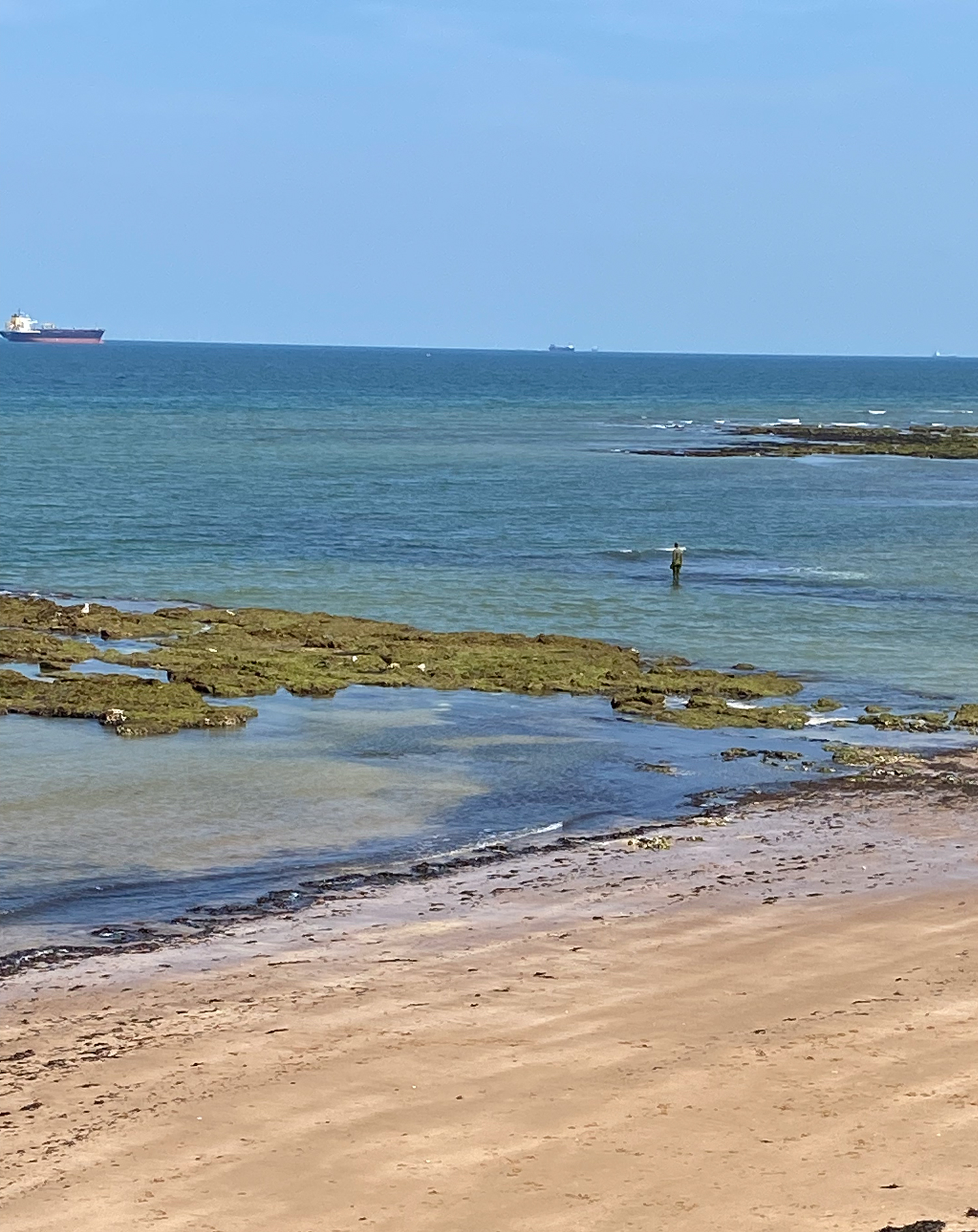
Photograph by Professor Emeritus David Hill, 8 May 2026, 11.55.
From close to the site of Turner’s Lodgings at Margate, With Antony Gormley’s ‘Another Time’, installed 2017, sited on the line of a former jetty that Turner looked onto.
https://turnercontemporary.org/whats-on/exhibitions/another-time
I will by no means be the first to take an interest in Turner’s association with Margate, but this will be the first time that his various sketches and finished works have been brought together in the same place. The sketches comprise the principal documentation of his contact with the town, and deserve careful consideration. Over recent years the treasure trove of sketches, watercolours and paintings in the Turner Bequest housed at the Tate has been catalogued online by an extensive team of researchers. Nonetheless, the exact chronology of much of his Margate work remains elusive, as does the identification and description of individual subjects. In what follows I hope to give greater solidity to some of the dating, and significantly expand and revise the commentary.
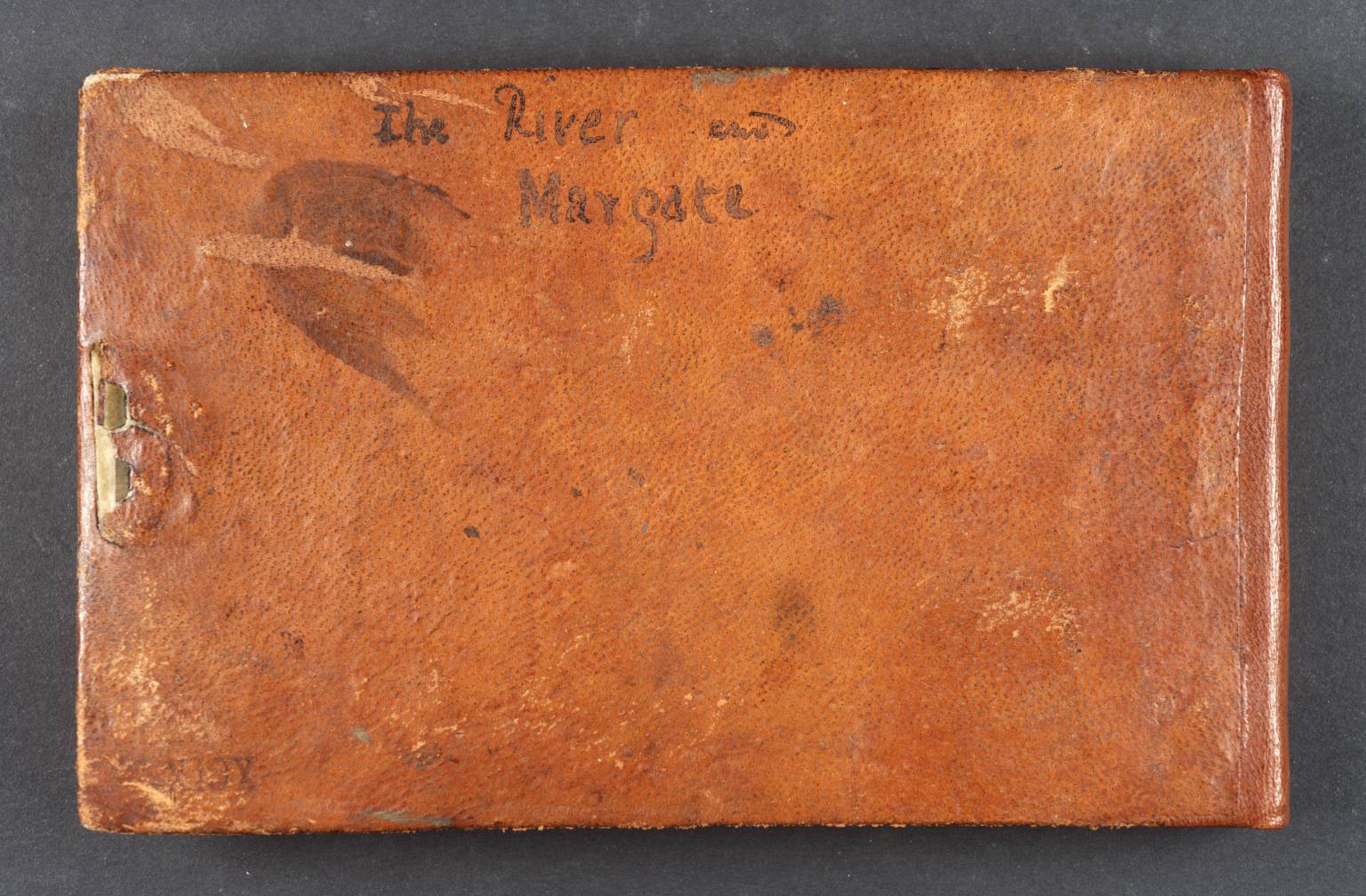
River and Margate sketchbook, currently dated c.1805-9
Turner Bequest, Tate, London, TB XCIX
https://www.tate.org.uk/art/research-publications/jmw-turner/river-and-margate-sketchbook-r1130548#entry-main
Beyond the sketches, hard documentation of Turner’s association with Margate is sparse. The vacuum has been filled with inference and speculation. Much of this is extremely entertaining, particularly since it relates Romantic interest from his hopeful youth and consolation later in a relationship with his landlady. There is enough to be establish some substance, but paucity has inevitably invited elaboration.
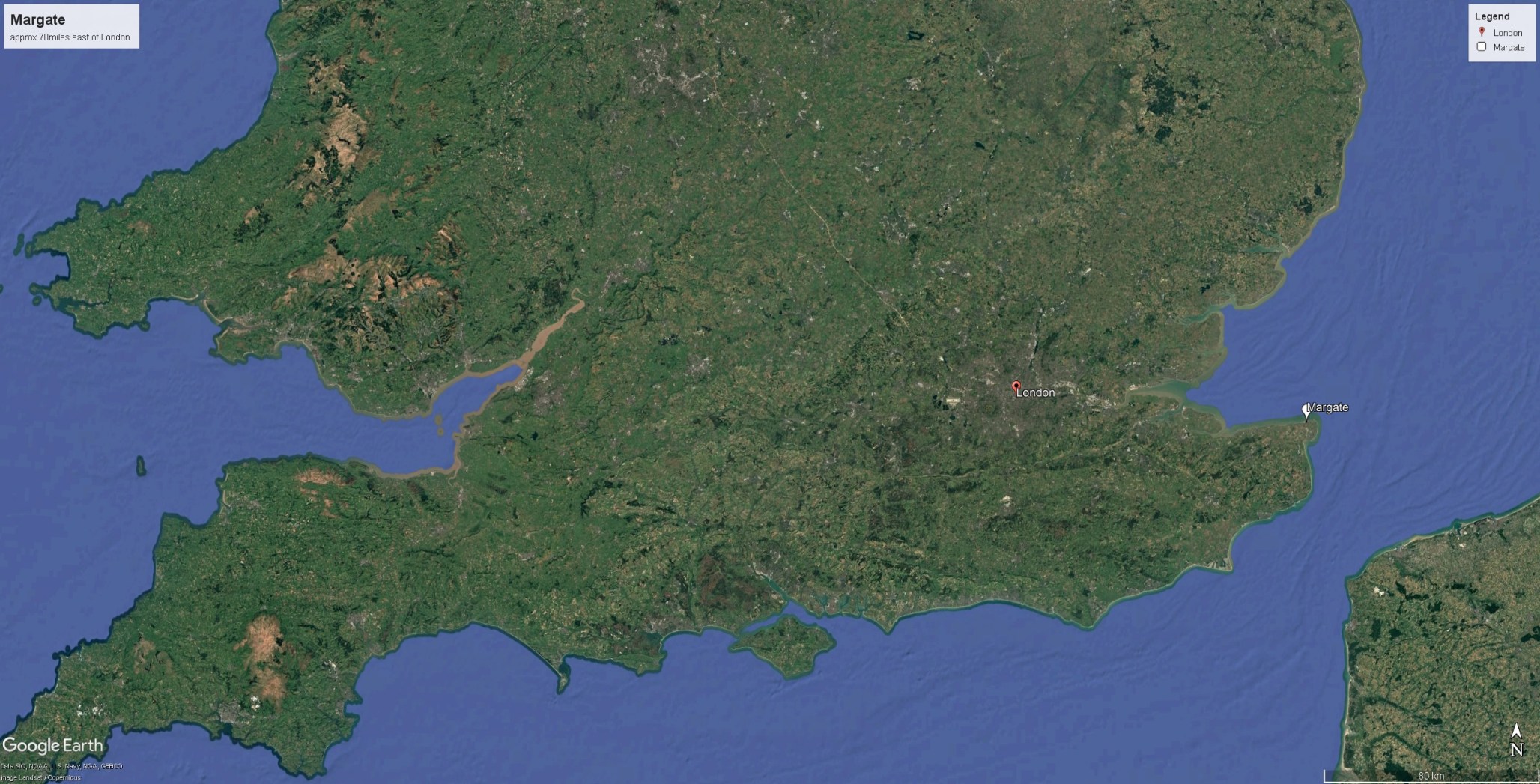
Margate lies about 70 miles east of London, at the very eastern tip of the north Kent coast where the Thames Estuary opens onto the North Sea and the English Channel. It is a remarkable location with the town giving way to low chalk cliffs stretching east to Foreness, where the coast turns south into the Channel. When Turner was young it was already renowned for sea bathing and healthful recreation, and during his lifetime the resort developed a range of genteel amusements and accommodations. Trade expanded with the advent in 1815 of steamboat services from London. The coming of the railway in 1846 enabled a day trip from London. By the 1850s the eminent art critic John Ruskin could express shock at Turner’s attraction to the place, and presume it further evidence of an apparent predilection of the artist for wallowing in common humanity. Ruskin might well have been right; but all the same we might consider Turner’s choices healthful.

The visual history of Margate has been well charted by Anthony Lee in his website www.margatelocalhistory.co.uk. This has proved an invaluable tool in my own investigations. One especially useful feature is a section of maps containing geolocated links to portfolios of early images.
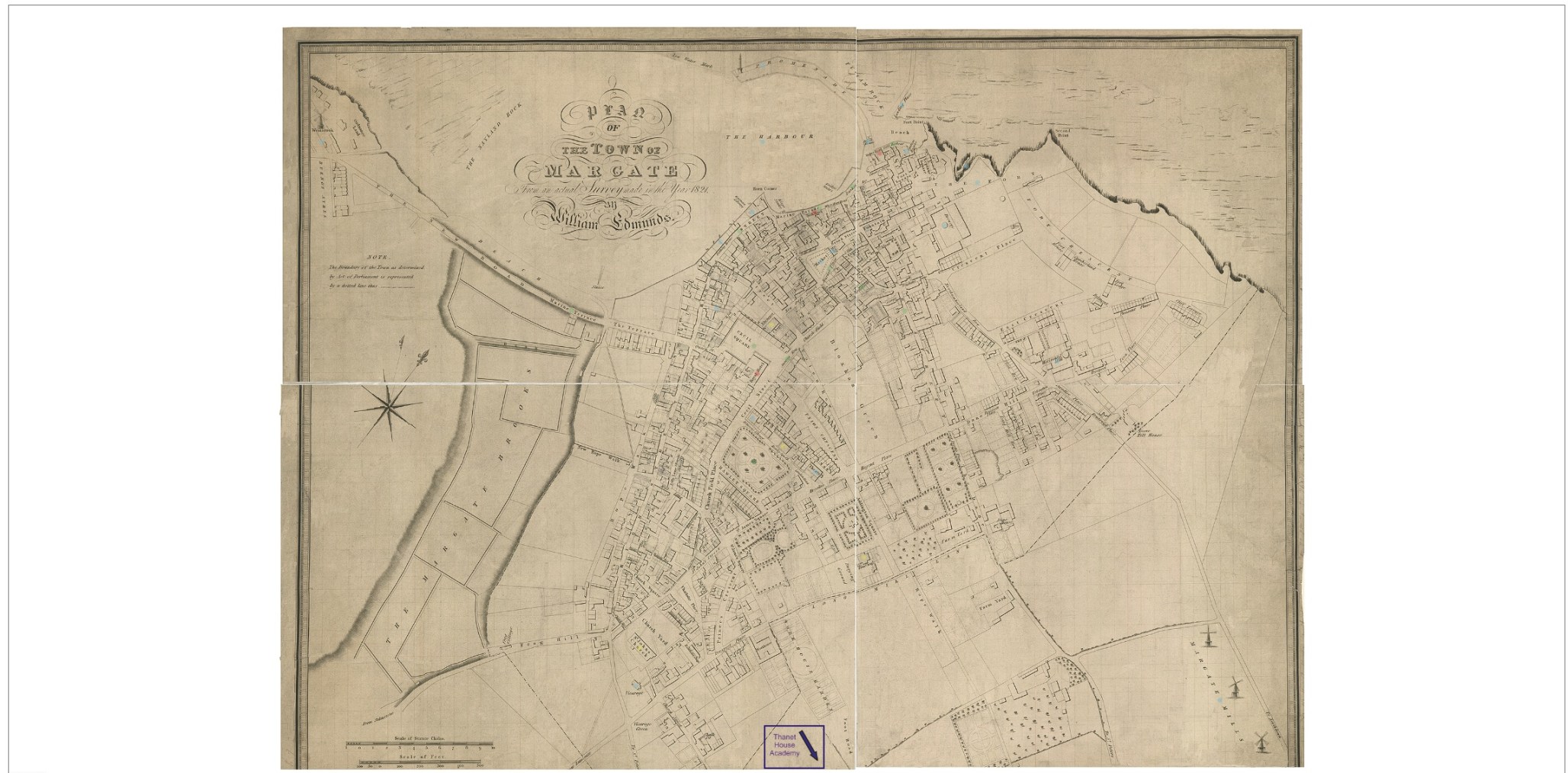
https://www.margatelocalhistory.co.uk/NewHotSpotViewer/Edmunds1821.htm. Turner’s engravings feature there, but not his sketches, but the resource helps with the process of locating Turner’s exact viewpoints, and for correlating the features that he records with other depictions.
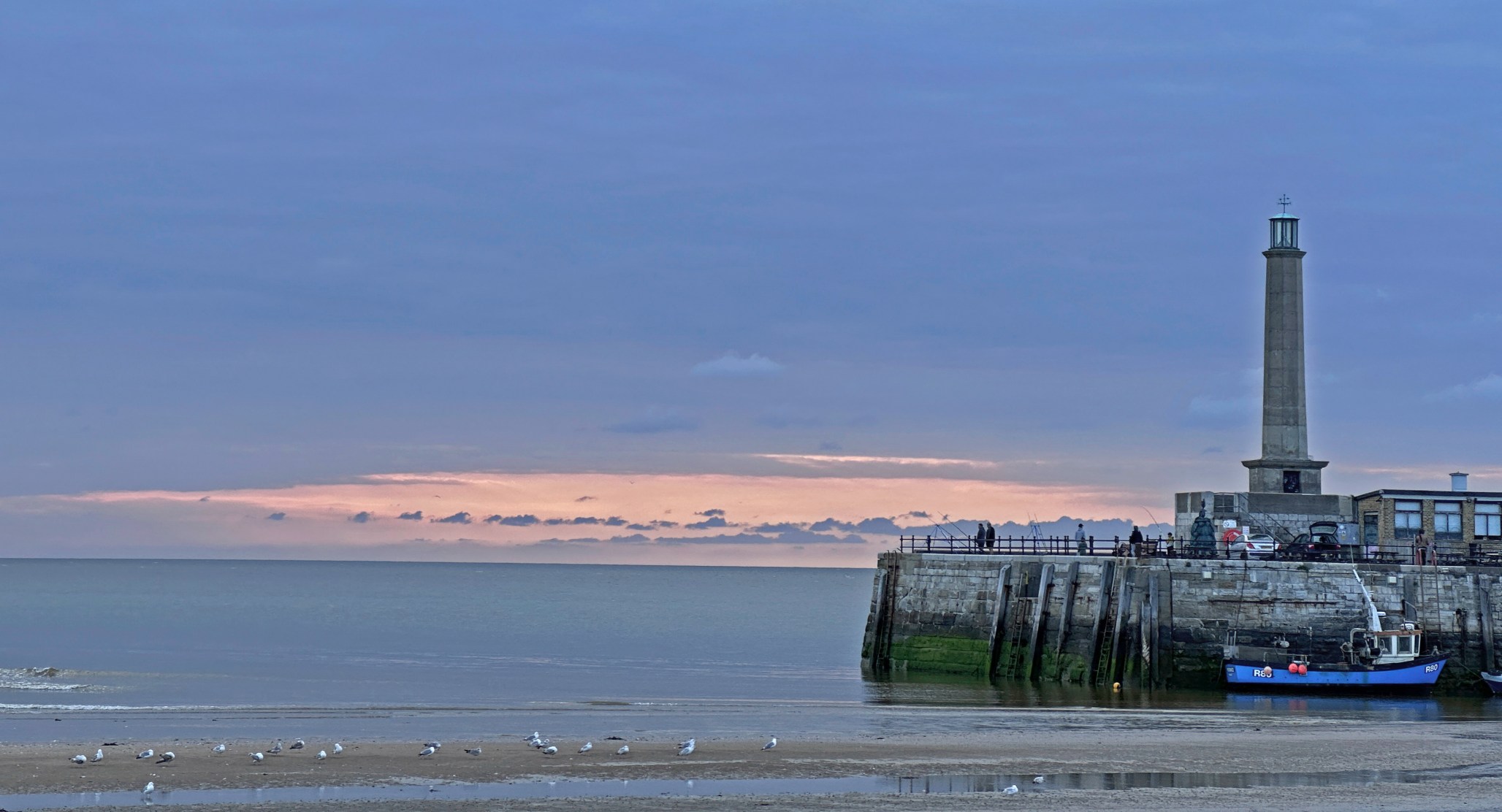
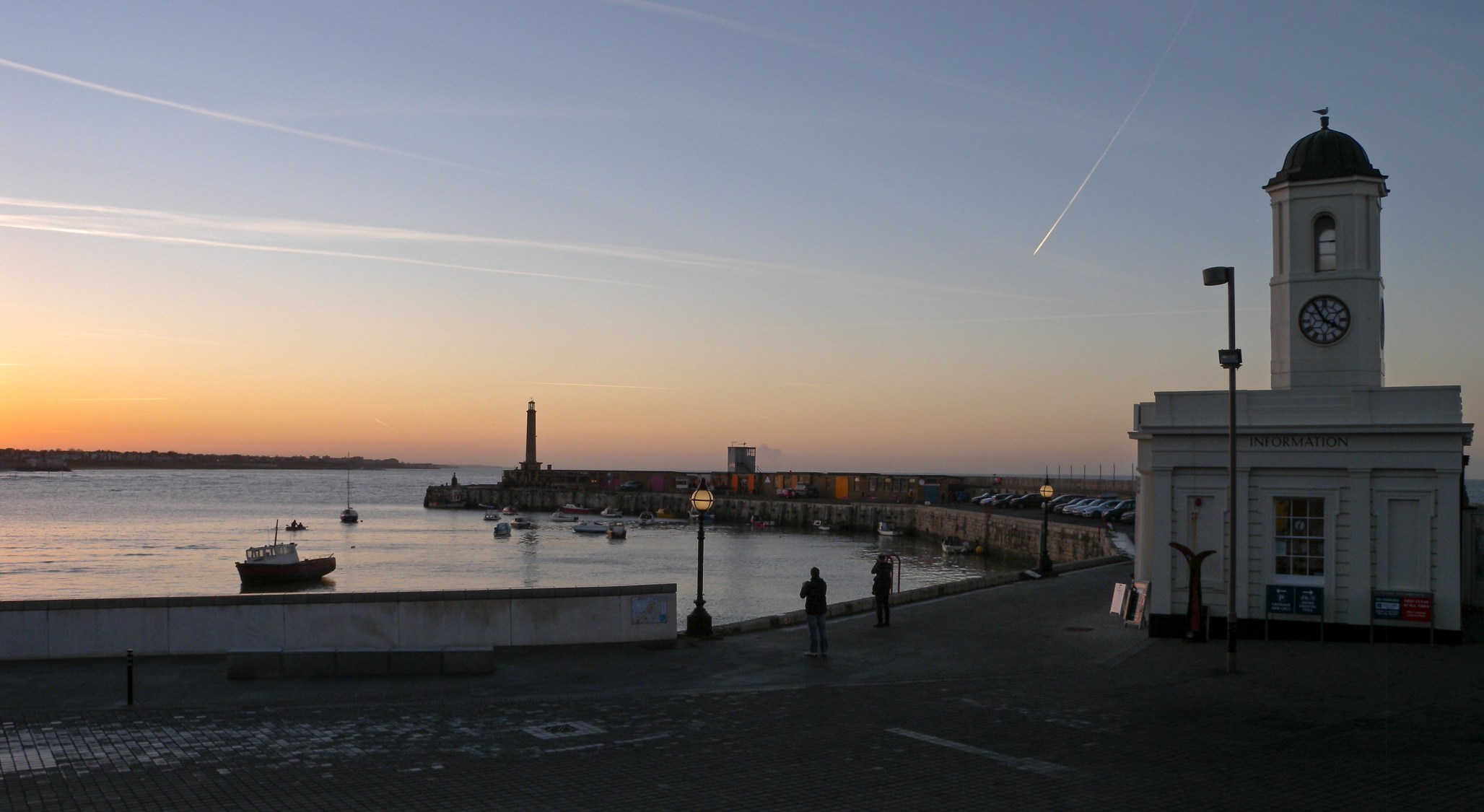
Photograph by Professor Emeritus David Hill, 7 May 2026, 19.50.
It has to be said that almost nothing survives of the Margate that Turner knew. The pier, lighthouse and Droit House remain recognisable, albeit the latter carefully rebuilt after being destroyed in wartime bombing. The old church of St Peter is likewise recognisable, but every detail has been altered in successive restorations. Margate was subject to regular transformation in Turner’s lifetime, and he faithfully recorded the features as they came and went, and those transformations have continued down to the present day. Many were formerly extremely grand; the Lido and the Winter Gardens on the east cliff being examples, and perhaps too grand to now be easily removed, renewed or replaced. The 1930s Dreamland Cinema on the main bay seems to deserve a better future than merely signalling the entrance to the amusement park behind. Quite what fate is deserved by the eighteen storey Arlington Tower seems uncontroversial, but Margatonians appear surprisingly loyal.
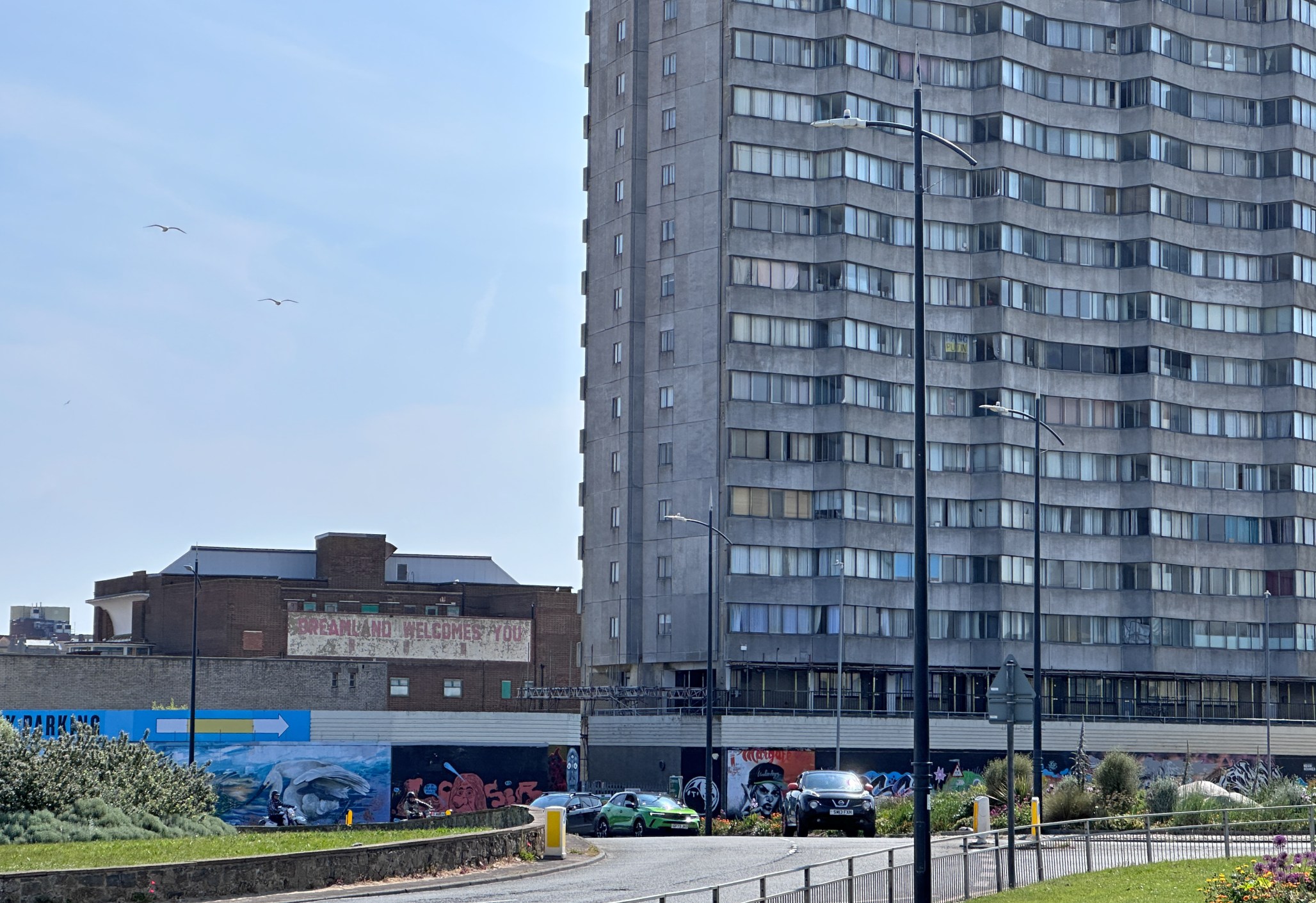
Photograph by Professor Emeritus David Hill, 8 May 2026, 10.40 am.
If you haven’t listened to it already, I really do think that you should listen to ‘Mark Steele’s in Town‘ on BBC Sounds.
https://www.bbc.co.uk/sounds/play/m0020hn8
Performed, we may read, in the Lido Cliff Bar and Snooker Hall on 24 June 2024. The Lido tower was covered in scaffolding when we walked past on 8 May, and the rooms appeared closed.
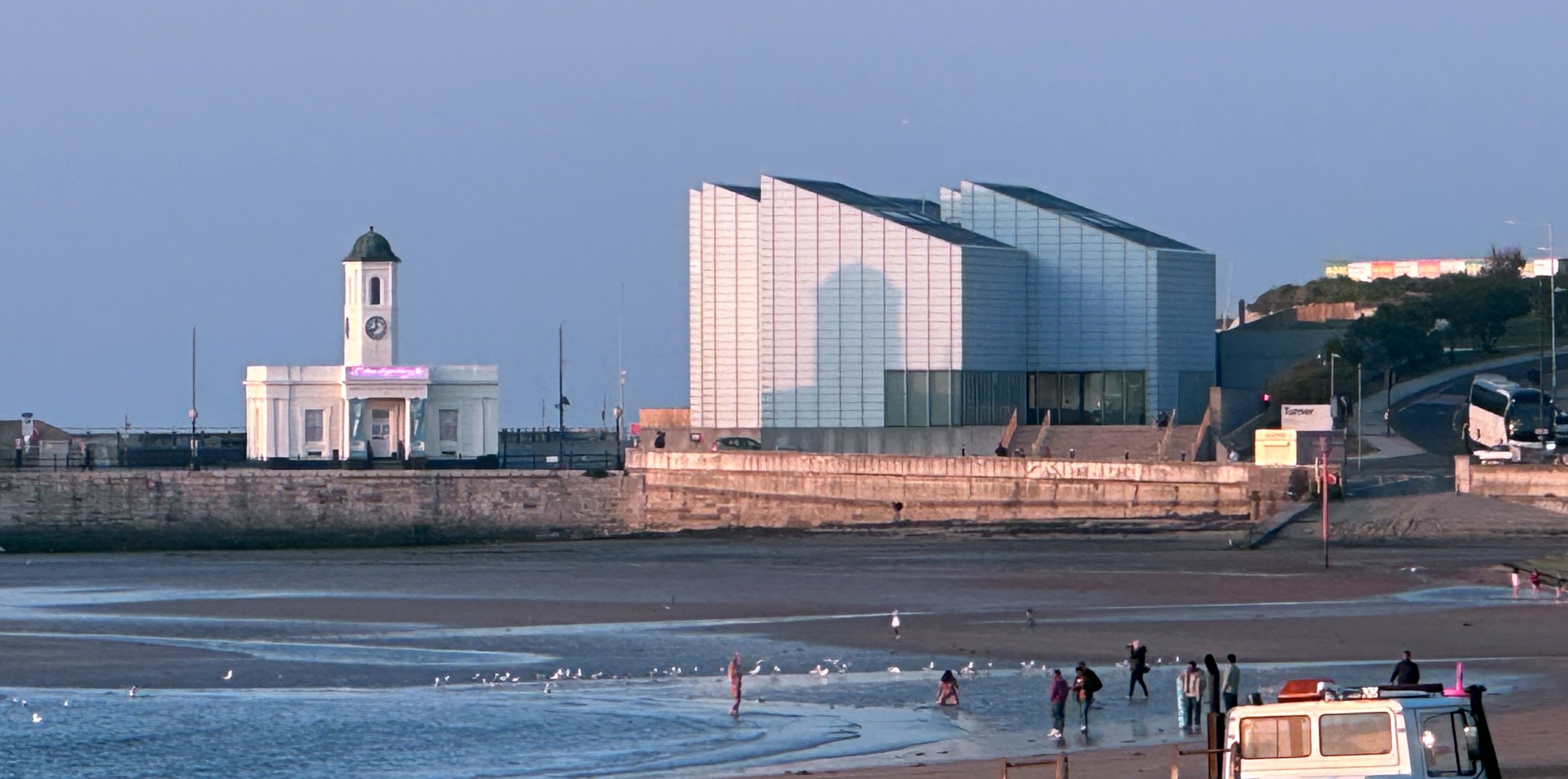
Photograph by Professor Emeritus David Hill, 8 May 2026, 20.00.
The most recent development is Turner Contemporary, which is an undoubtedly beautiful space inside. This covers the site of the house in which Turner stayed during his latter years at Margate. It seems to me that the designers of the new gallery missed a trick when drawing up the plans. It would have been easy to mark out on the ground the exact plan of the house, and take that as the starting point for the design. As it is the new building has obliterated the connection.
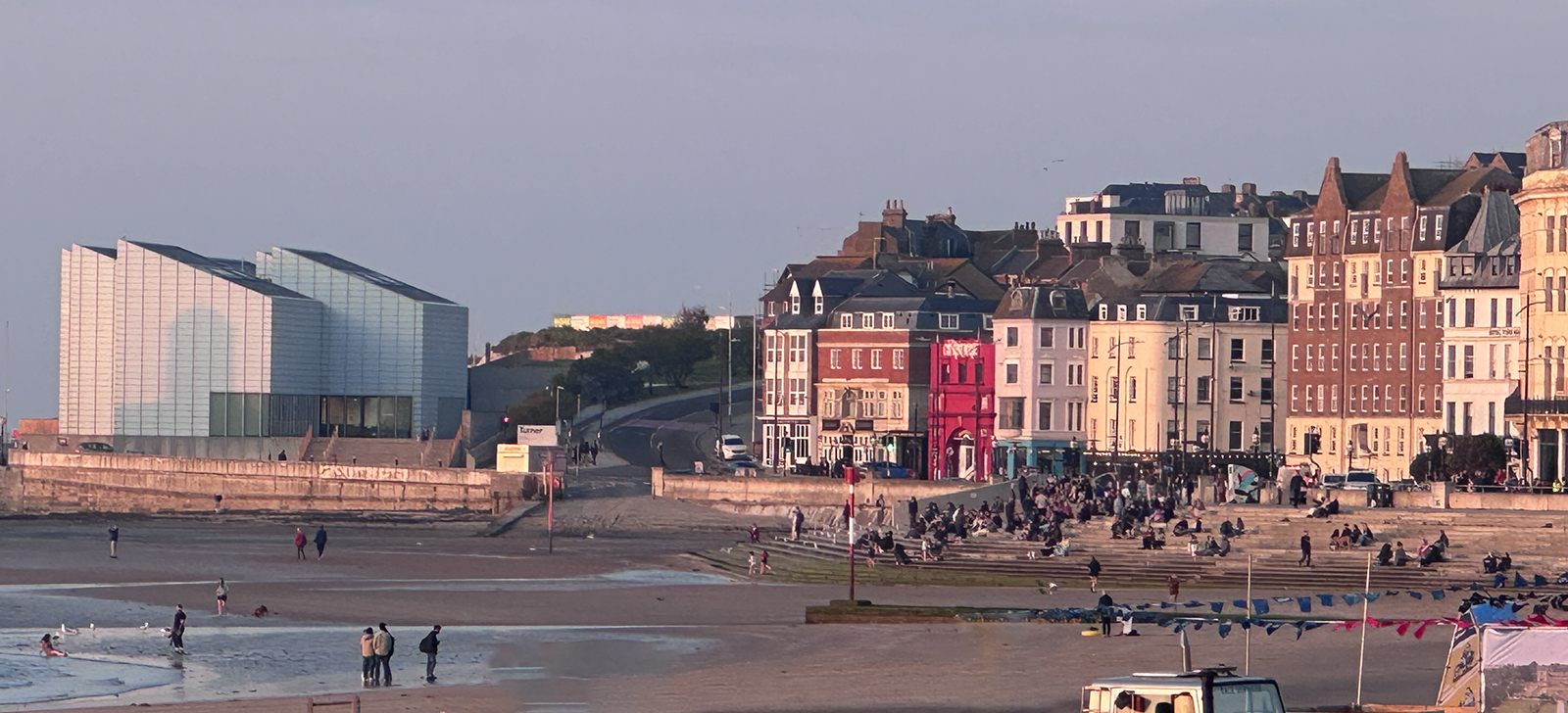
Photograph by Professor Emeritus David Hill, 8 May 2026, 20.03.
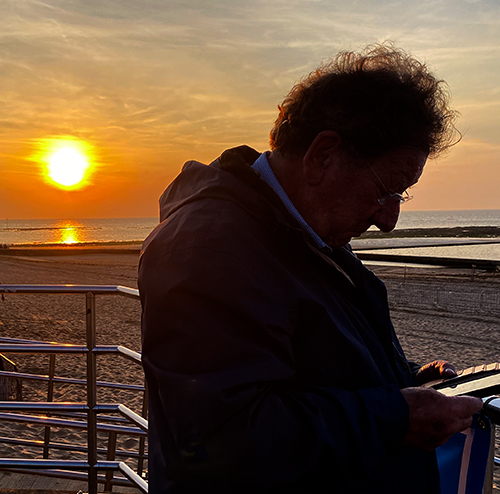
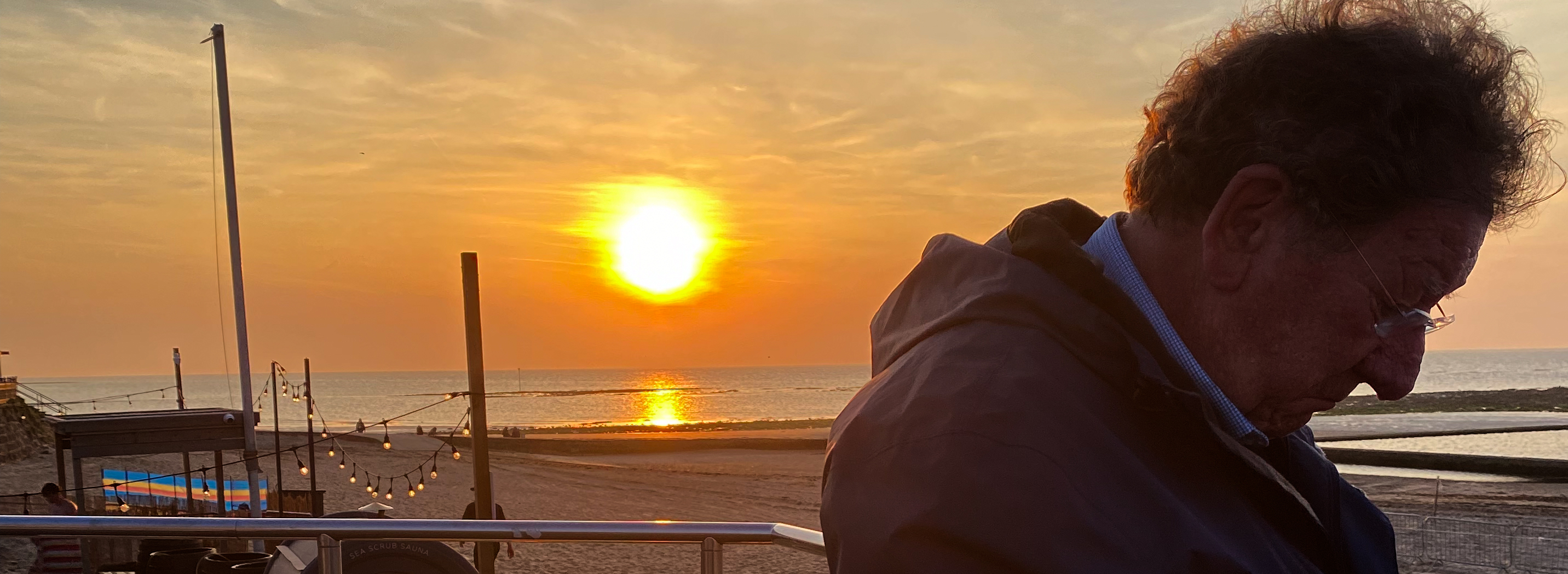
Despite erasure, Turner’s Margate remains nonetheless entirely present. It never was so much about the town as the situation with its low chalk cliffs and curve of beautiful sand overlooking a theatre of ocean, light, cloud and weather. One of the best new developments in Margate is the harbour stairs, which provide a nightly grandstand for dozens of sundowners. Turner would have highly approved of that, and thought it entirely sufficient.
To be continued