This is the second instalment of a series examining Turner’s Margate subjects. Here we examine work dating from his early teenage years.
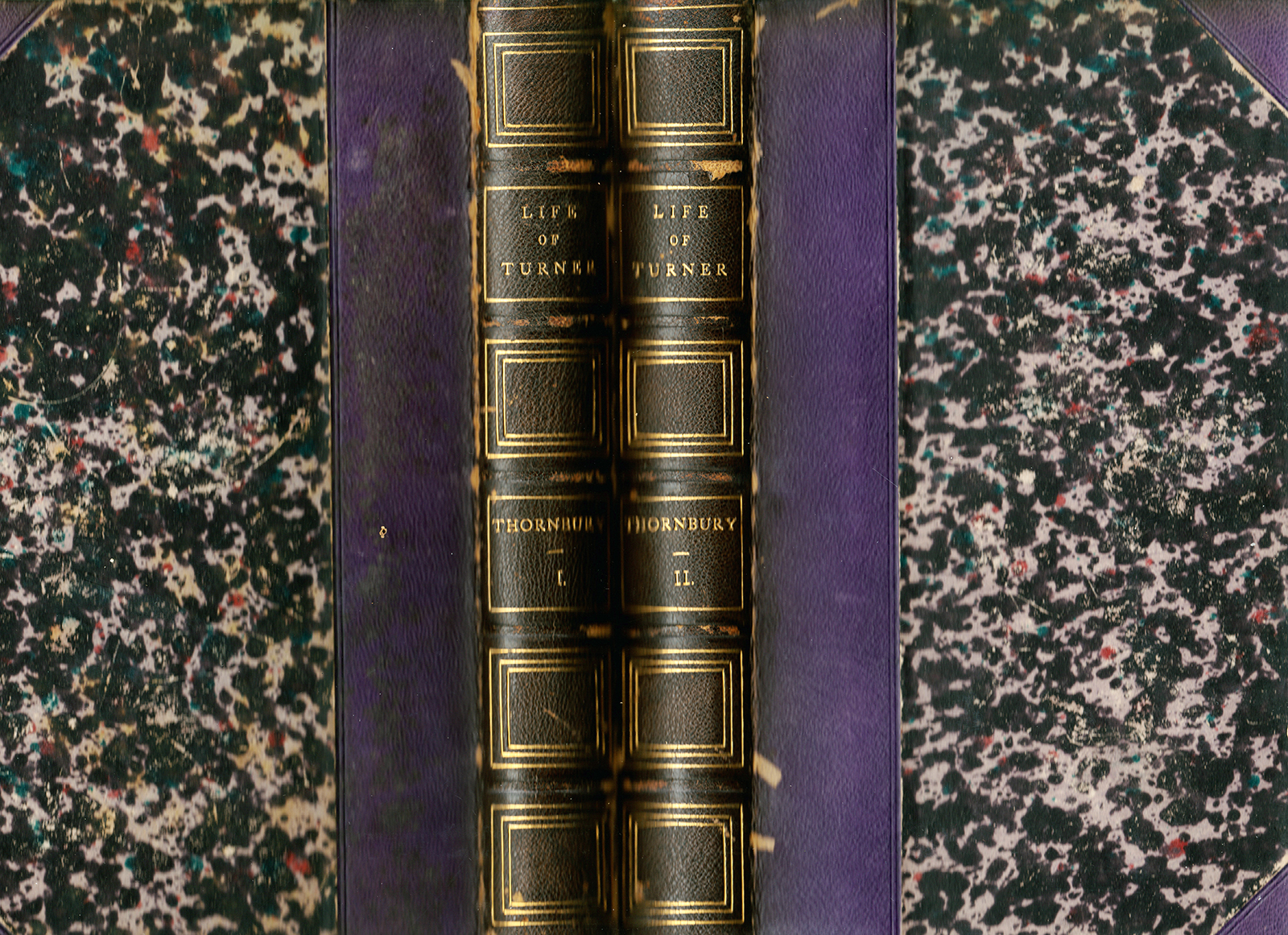
The earliest account to associate Turner with Margate is the full-length biography by Walter Thornbury published in 1862 just over a decade after Turner’s death. Thornbury was alert to every morsel of journalistic tittle-tattle and subsequent scholars have been wary of much of his detail. He cast his net widely for stories, had access to many people that had known Turner personally, and gathered a heap of testimony. Ruskin hated Thornbury’s glorification of Turner’s faults and blemishes, but his Life remains an unrivalled source of anecdote. Frustratingly he did not by any means properly attribute his sources, so we are left to wonder how reliable they might have been, and regret any opportunity to interrogate their veracity.
His remarks on Margate however, do give the impression of having been derived from a knowledgeable source. It is perhaps most useful for our purposes to republish his remarks in full: The first mention of Margate occurs on pages 24-25.
To view image full-size, right click image and select open in new tab. Close tab to return to this page.
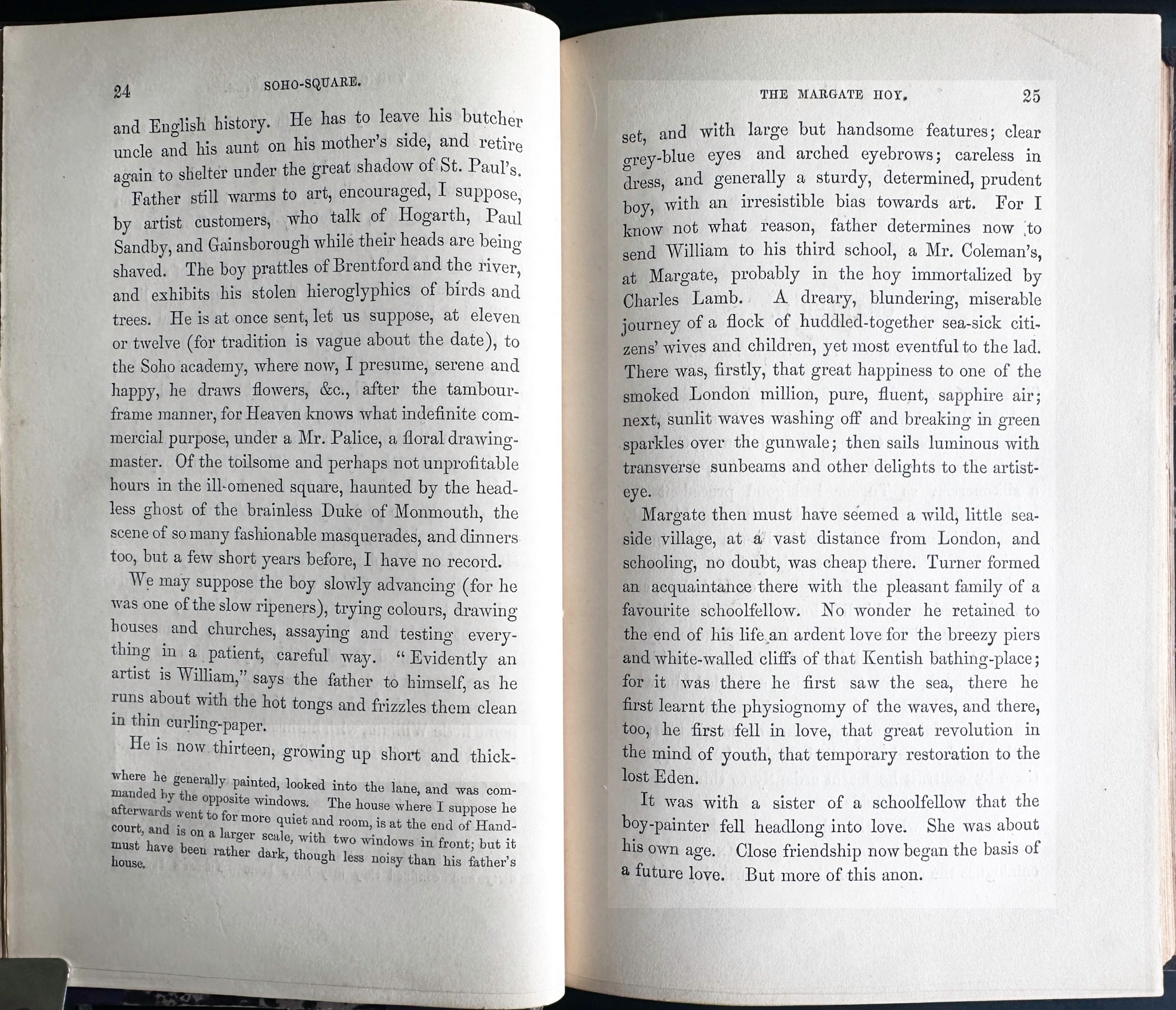
Thornbury’s musings may contain some value, but if we blow away the froth, the specific information boils down to Turner’s first residence taking place when he was thirteen, i.e. in the year 1788, and that it involved attending a school run by Mr Coleman. No further documentation of that schooling has ever been found, but the reference is particular enough to have found general acceptance.
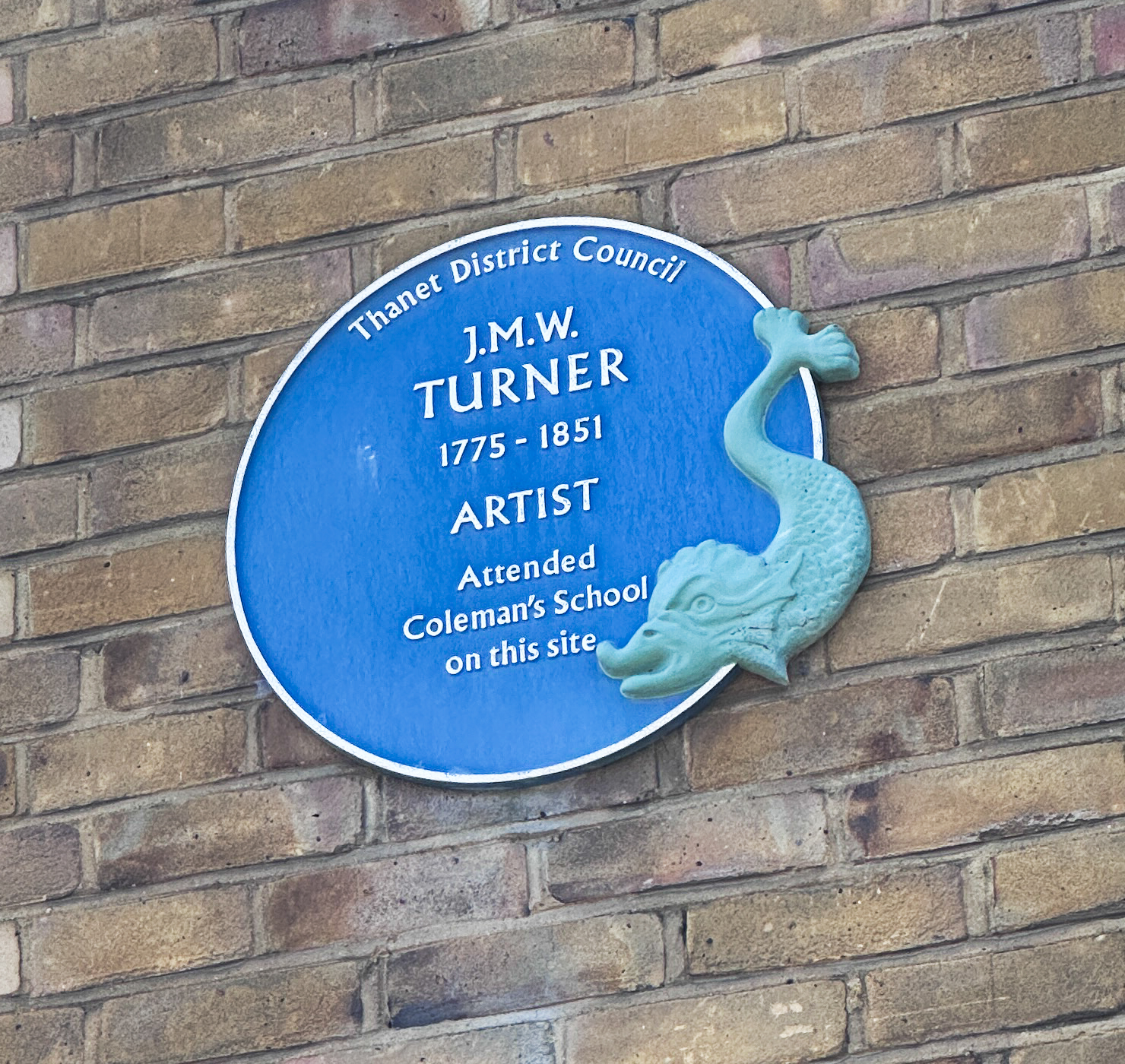
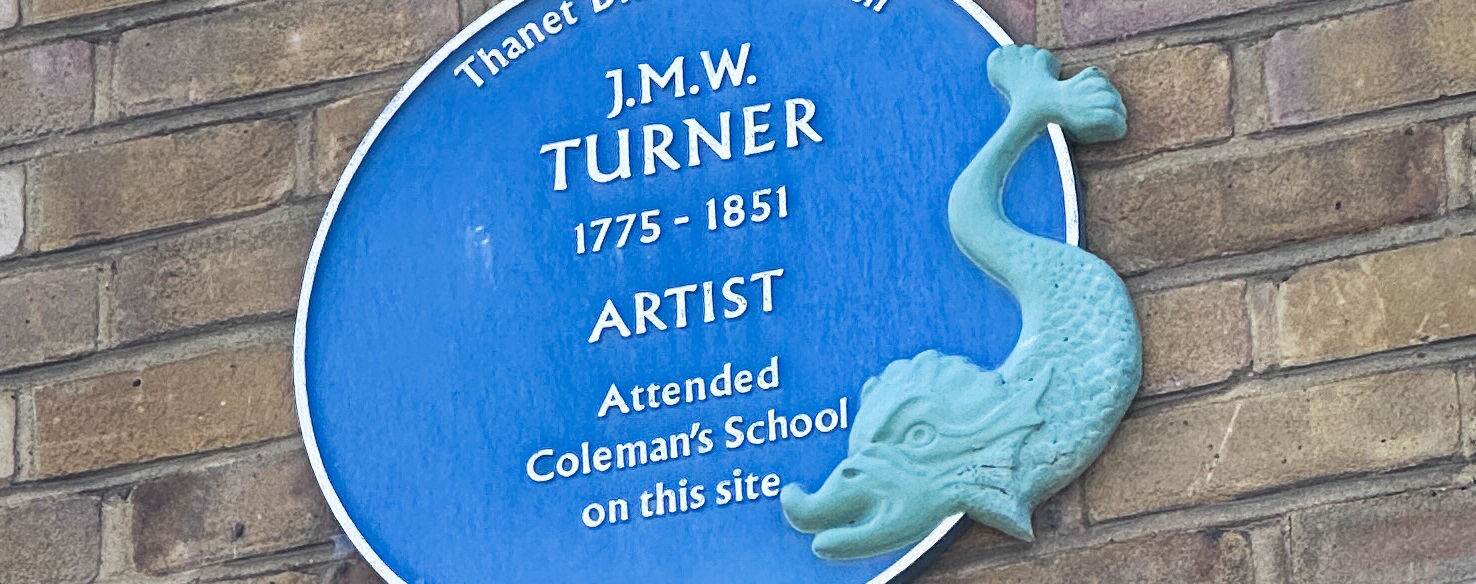
The evidence is perhaps more tenuous than one might wish but Thornbury’s assertion is now reified into a blue plaque on a modern building at the end of Love Lane opposite the George Hotel.
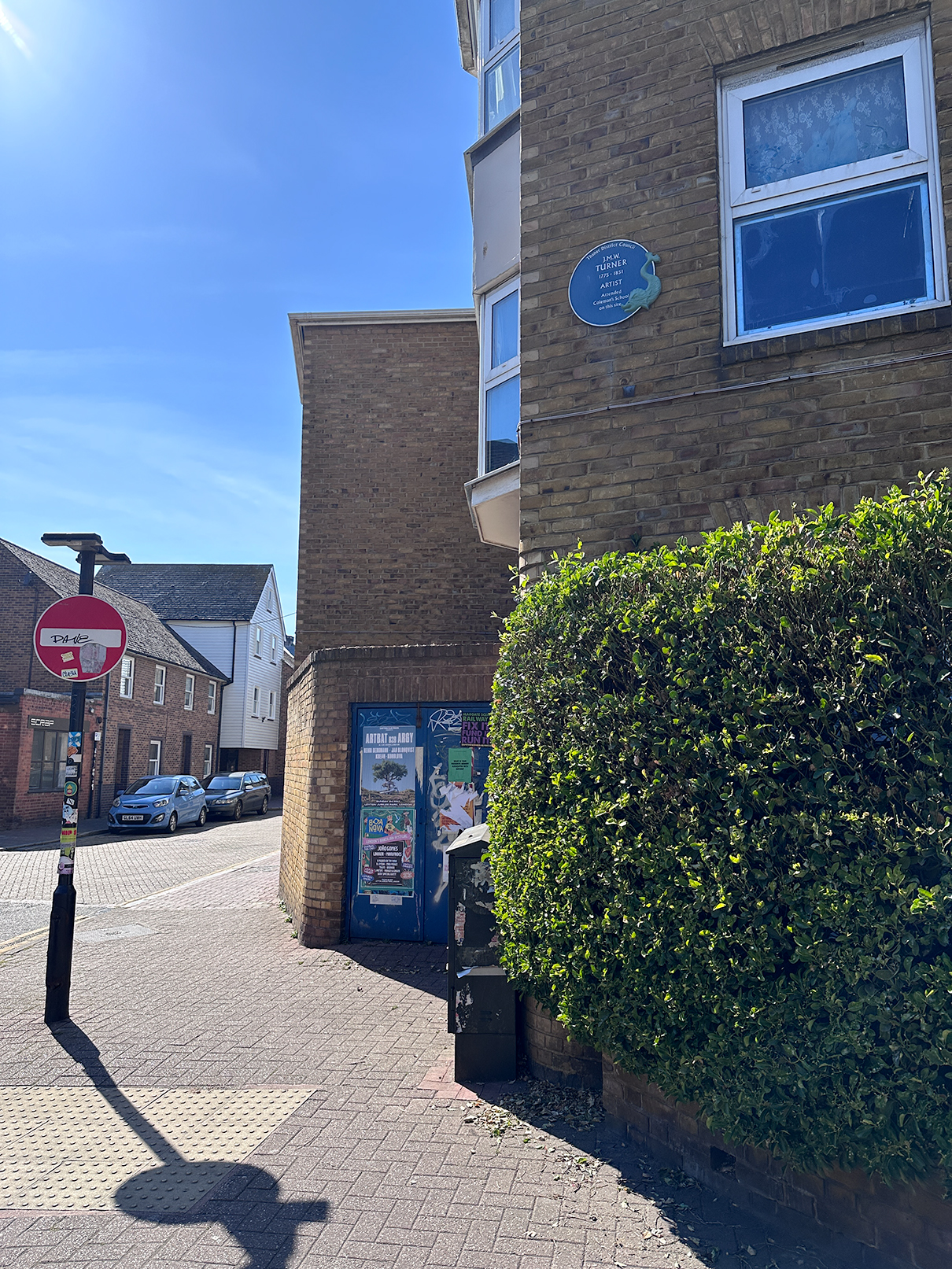
Photograph by Professor Emeritus David Hill taken 8 May 2026, 15.50
To view image full-size, right click image and select open in new tab. Close tab to return to this page.
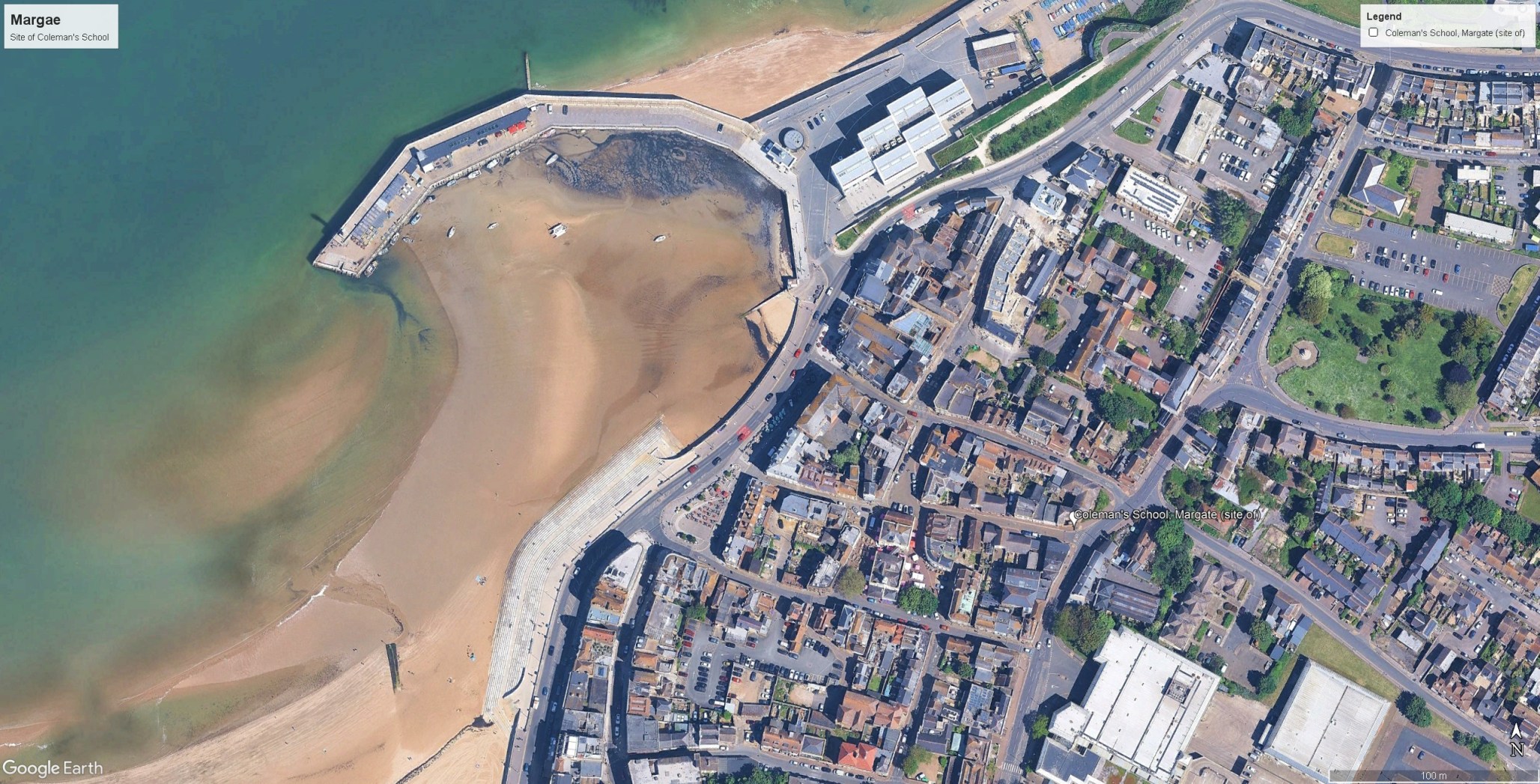
Even Thornbury had to confess that he had no idea why Turner went to Mr Coleman’s. Nor has this question yet been conclusively answered. I think we can be sure that the schooling followed from being in Margate rather than vice-versa. The most recent biographies by Anthony Bailey, James Hamilton and Eric Shanes agree is that he was probably sent to Margate to escape London which was wracked by disease. Specific suggestions include that he needed to be sent away from his mother who was mentally-ill and eventually had to be committed. Another is that he needed to be taken away from Brentford where he was living with his uncle because of a serious outbreak of tuberculosis in that town. Another is that he stayed with a relative who was a fishmonger of Margate; possibly a relative of his mother but the exact particulars have not been established. Another is that the move to Margate was suggested by the Trimmer family that he knew from Brentford.
Click on any image to open full-size in gallery view. Scroll through inages in gallery mode. Close gallery to reurn to this page.

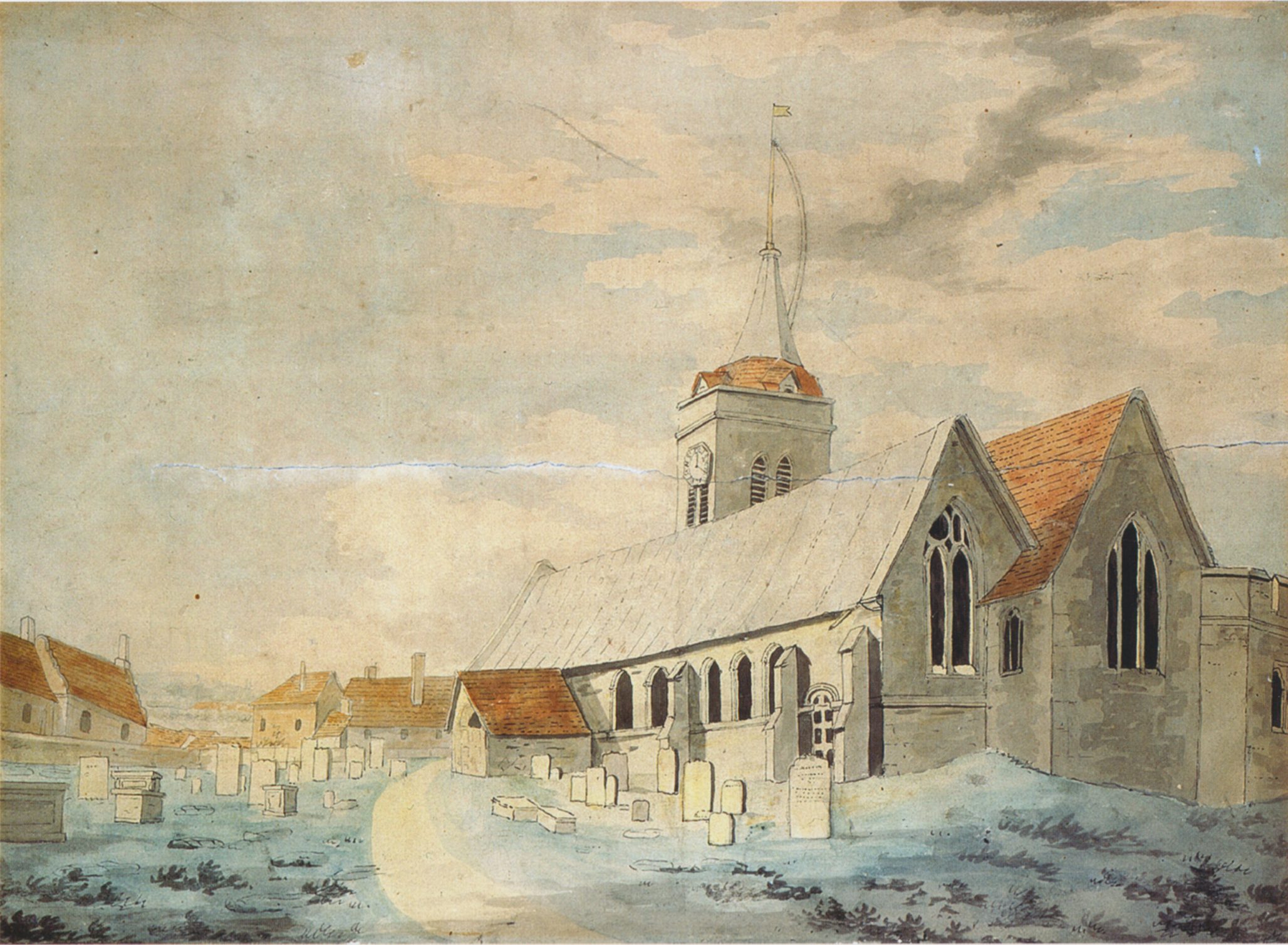
His earliest artistic association with Margate takes the form of four watercolours in a private collection. Two show Margate subjects and two views at nearby Minster. These were listed by Andrew Wilton as nos 1-4 in his 1979 catalogue of Turner’s watercolours, where he says they are ‘survivors of a series of six drawings given by Turner’s mother to Jane Hunt of London, who married James Taylor of Bakewell, Derbyshire.’ Wilton does not say what the evidence for that might be, but presumably there must be a note of some sort with the drawings. There appears to be no signature or inscription on the drawings themselves, nor any indication of what might have become of the two others. I have written about these watercolours in a separate series on sublimesites.co:
It is worth reiterating that these watercolours are plainly juvenile work, and although generally accepted by Turner scholars, they are no more than promising work from a thirteen-year-old. As I observed previously, however, they do blossom under close scrutiny.
To view image full-size, right click image and select open in new tab. Close tab to return to this page.
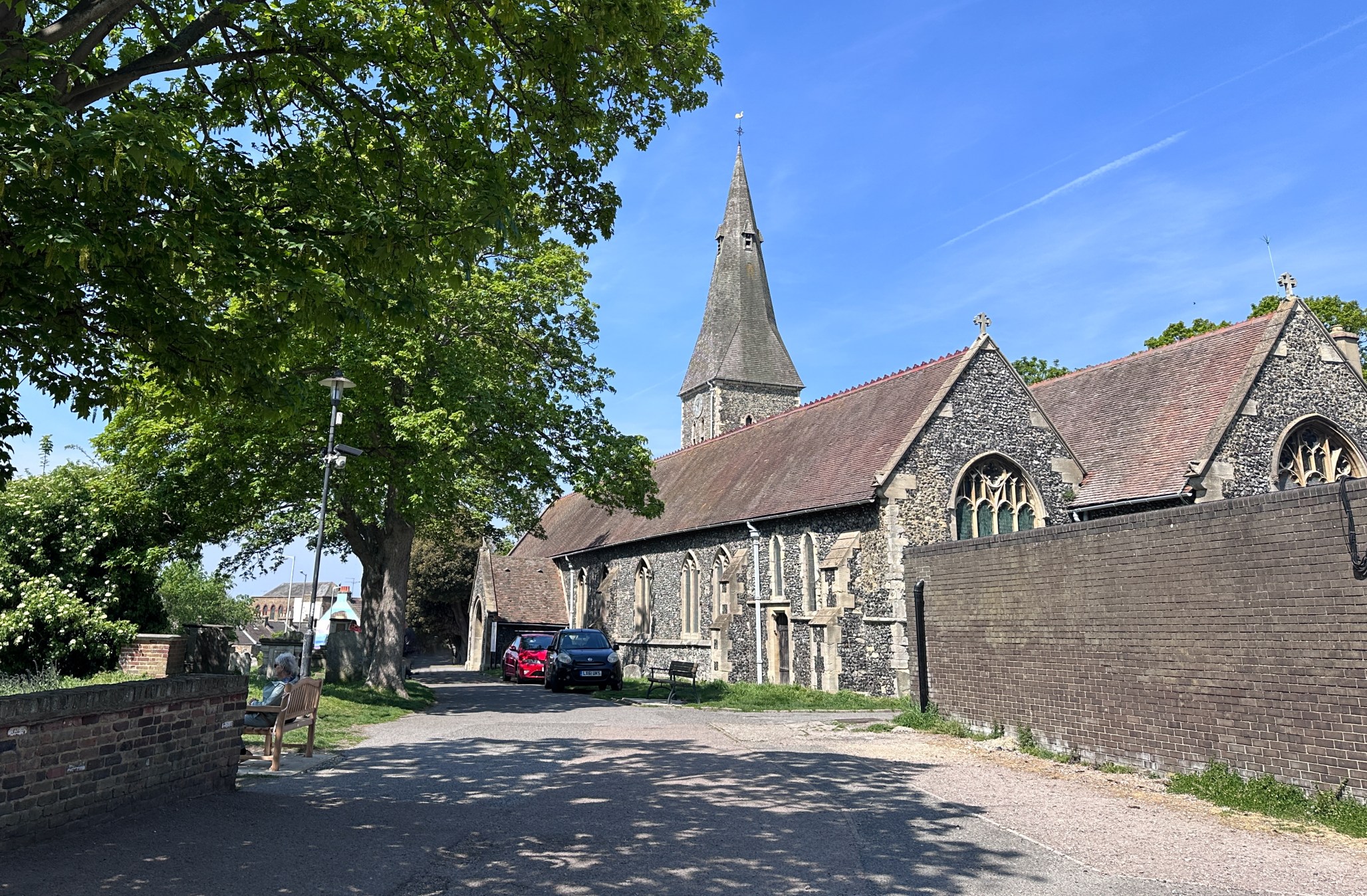
Photograph by Professor Emeritus David Hill taken 9 May 2026, 11.39 am
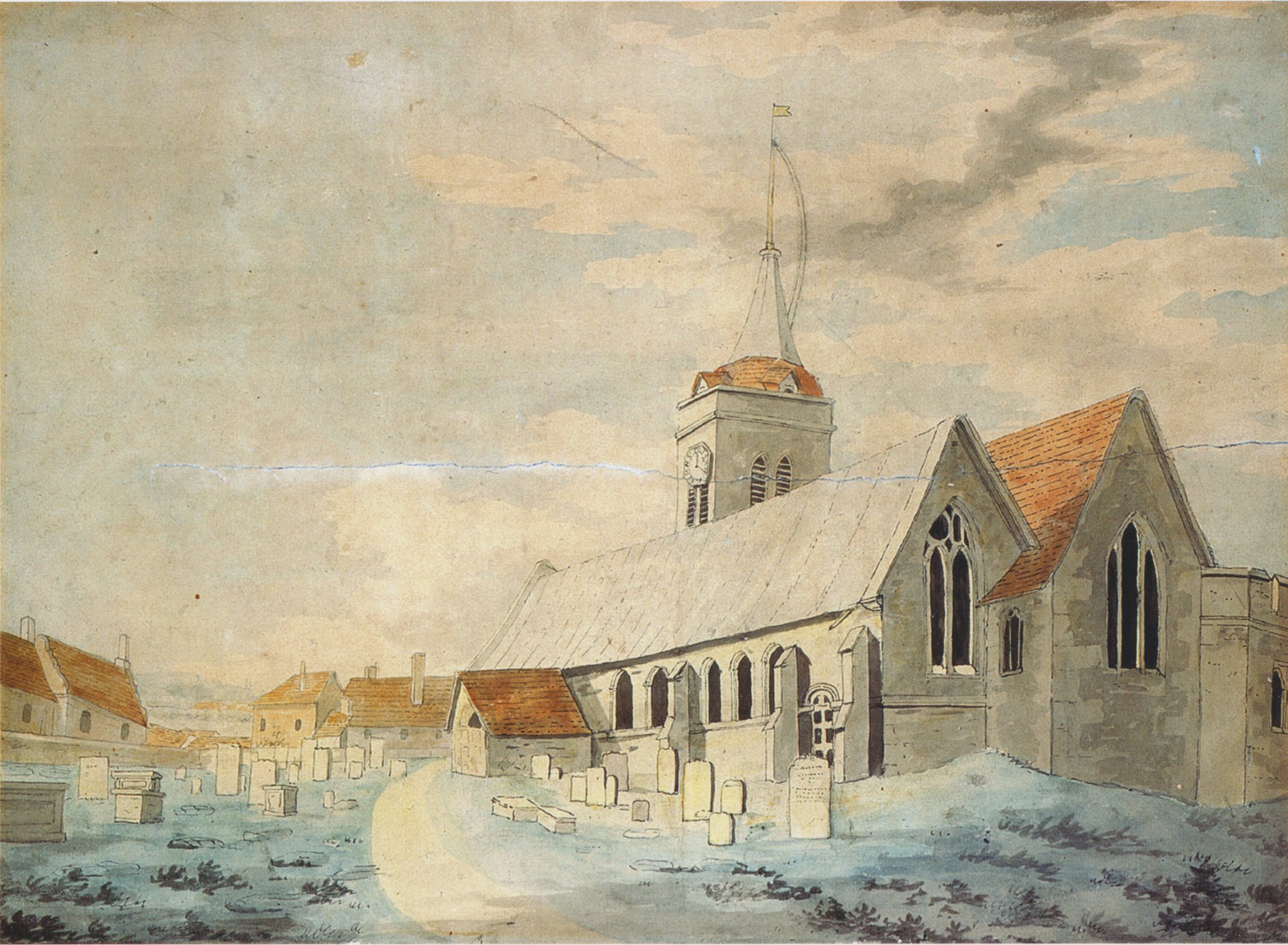
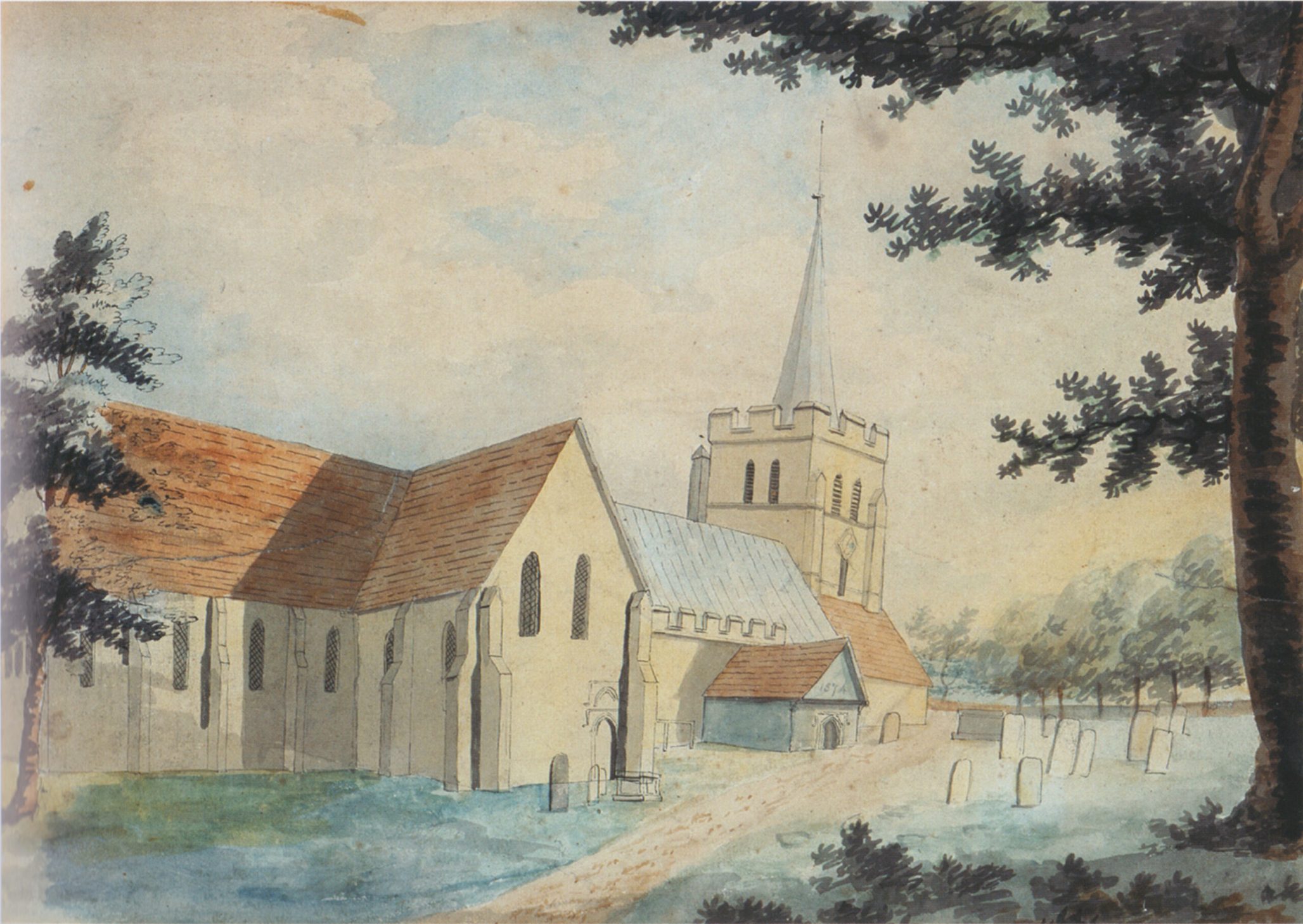
St John’s Church, Margate, c.1788
Pen, ink and watercolour on paper, 12 1/8 x 17 1/8 ins, 308 x 435 mm
Private Collection
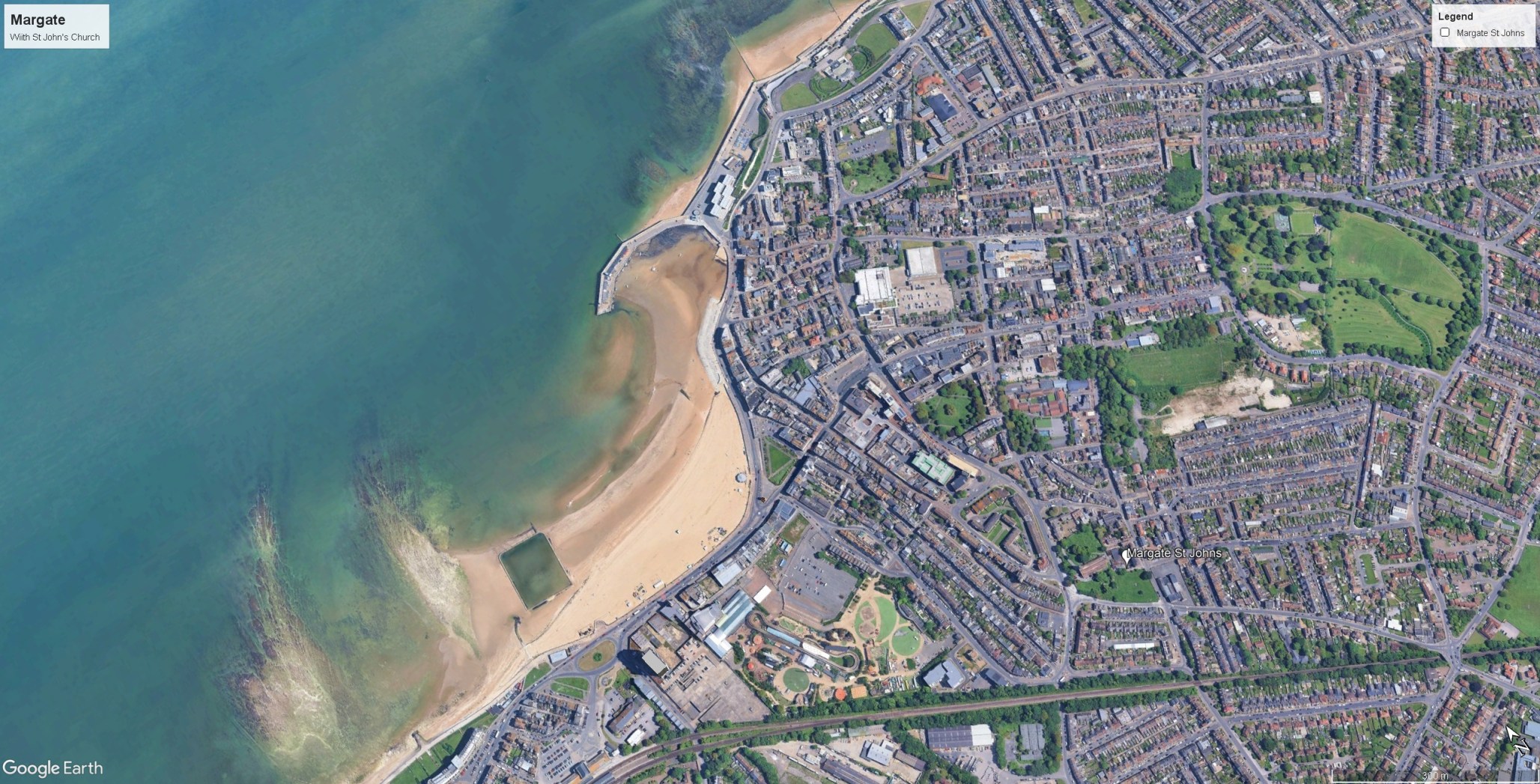
The first Margate subject shows a view of the medieval parish church of St John’s, which stands towards the southern end of the modern town centre. Its site shows that the original settlement evolved in the shelter of the creek rather than on the open shore. Turner’s viewpoint is readily identifiable today, just back from the south-east angle, near the present church hall, although it will be discovered that the church has been significantly remodelled since Turner’s time. The quality of observation in the watercolour appears to be excellent. We can see that the near aisle roof is leaded, but that beyond is tiled. More particularly, the observation of light and shadow is exceptional. The light and shadow, particularly on the chancel roof to the right, place the sun high to the left consistent with the time shown on the clock, twenty minutes past twelve. It seems very likely, therefore, that the watercolour was painted on the spot. Turner painted from nature throughout his career. He is particularly famous for witnessing and recording the great sublimities, but I make the point in the original article that perhaps his greatest strength derives from being alert to nature’s quieter and more quotidian messages..
To view image full-size, right click image and select open in new tab. Close tab to return to this page.
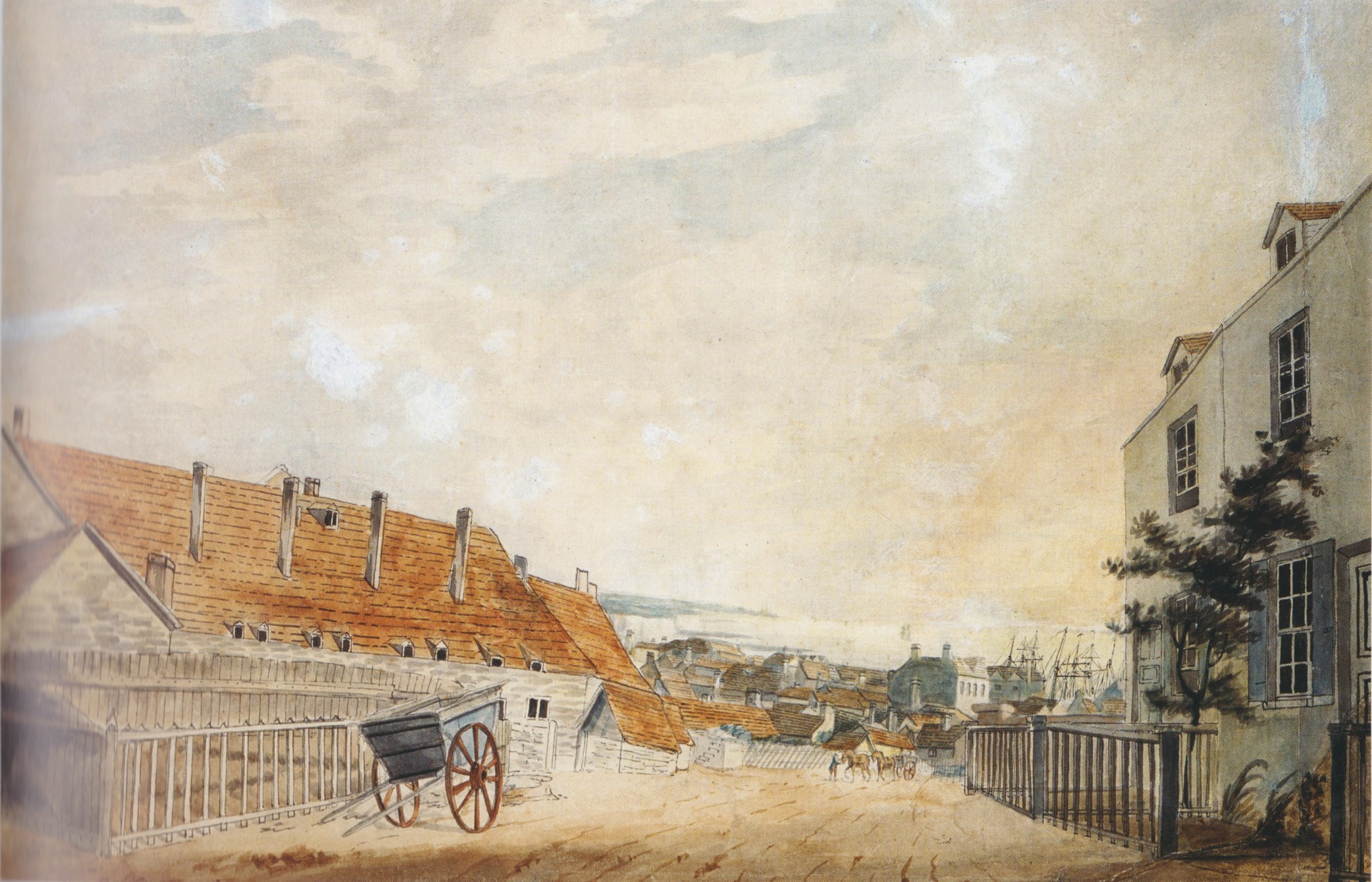
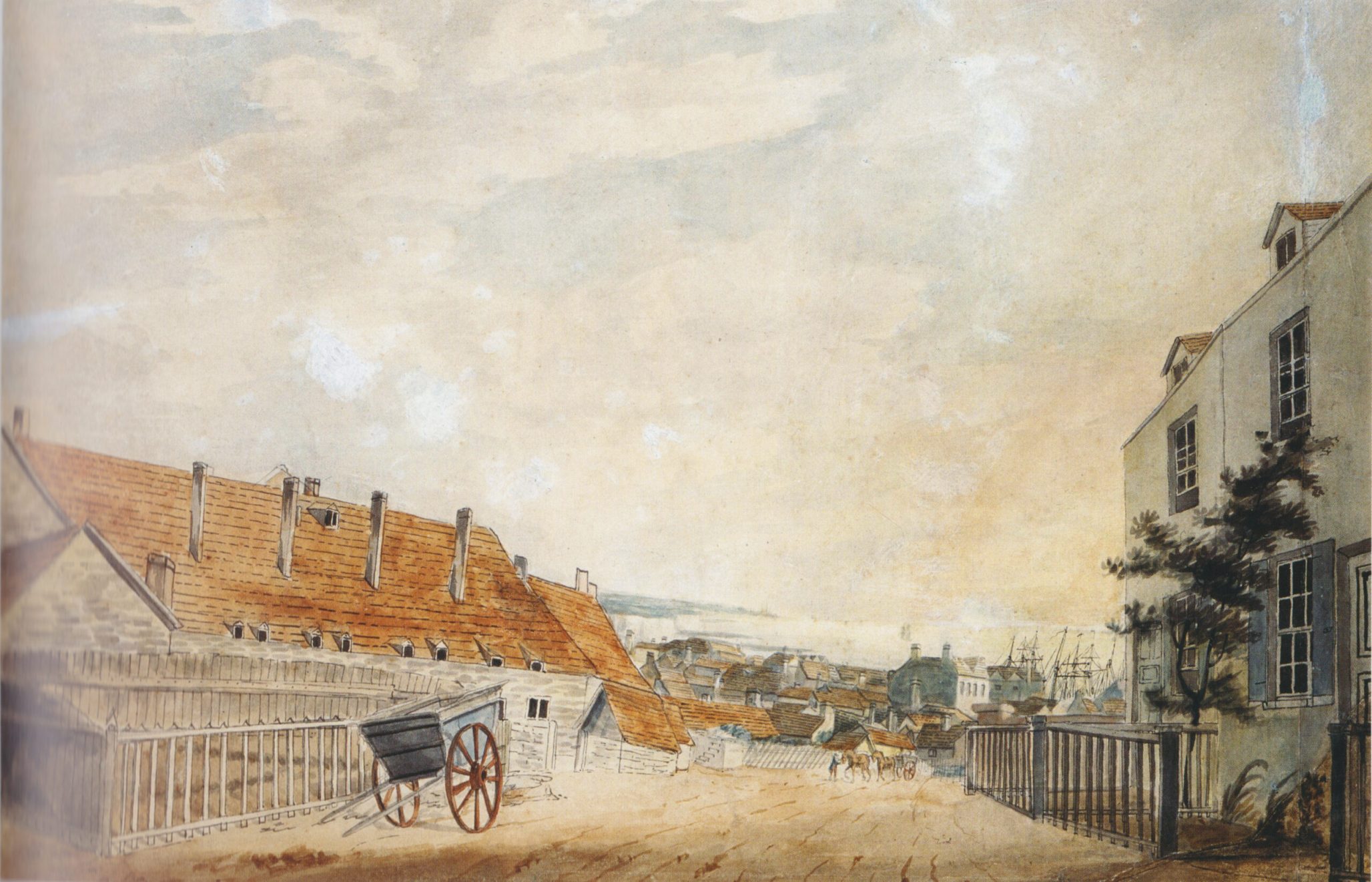
A street in Margate, looking down to the harbour, c.1788
Pen ink and watercolour on paper, 10 5/8 x 16 ins, 270 x 407 mm
Private Collection
The viewpoint of the second watercolour remains unconfirmed. We can see Reculver church on the point in the far distance, and taking the line of sight between the coast and the harbour, Turner’s viewpoint appears to be somewhere in the vicinity of Northdown Road. This is the only street in this part of town that rises along the line shown here. The large double-gabled house in the middle distance might even be identified with the still-standing home of Francis Cobb (1726-1802) brewer and banker, styled the King of Margate. In this case Turner’s viewpoint would be somewhere above the site of his once famous, but now disappeared brewery.. The building to the left appears to be of some age and might well have been a malting house, but the area is now comprehensively redeveloped, and nothing can be seen resembling Turner’s view.
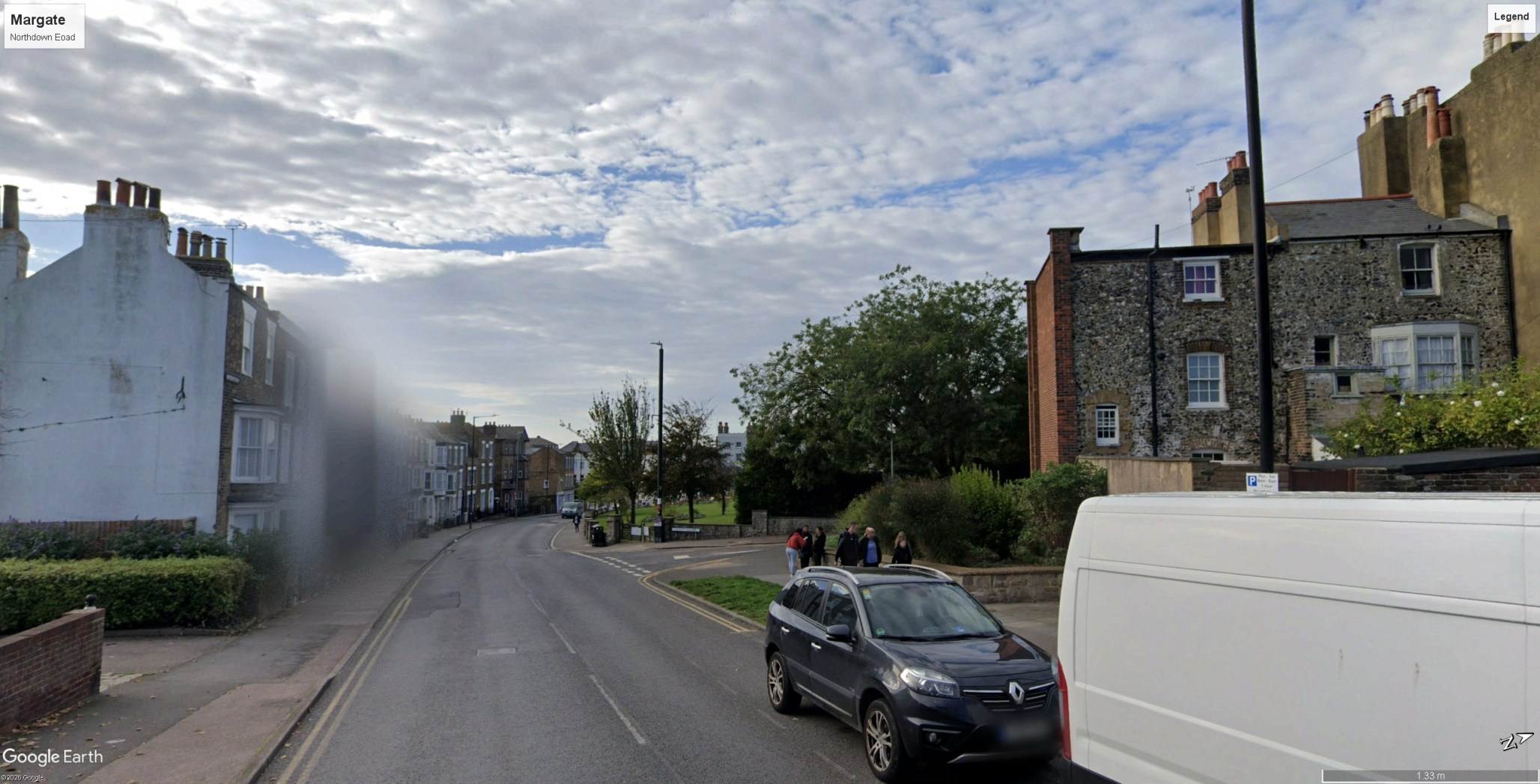
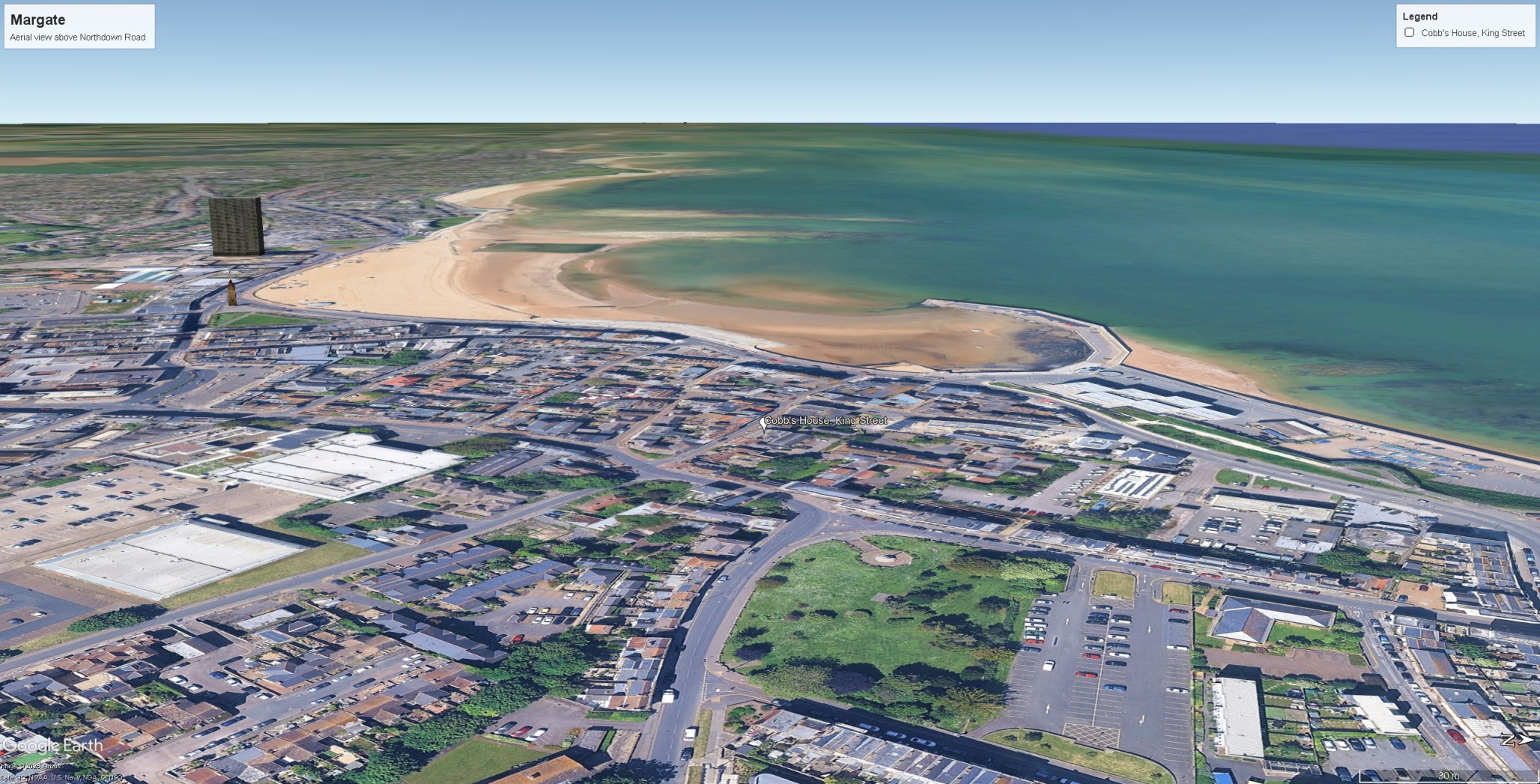
It seems strange that there is little of obvious general interest in the composition. There were better views to be found closer to the edge of the Fort cliffs that looked towards Reculver across the harbour and bay. It does seem possible that if the exact viewpoint could yet be identified that something in the composition – perhaps the house to the right? – might turn out to have personal significance. It is unusual, however, in that there is little of pubic or general appeal in the composition. Notwithstanding that, there is an obvious sense of patience and absorption in the task. Nothing is hurried or skimped, no any detail generalised or passed over. His diligence is constrained only by technique. Forty years later there was no-one in the world that could coax pencil pen and watercolour into a wider range of effect.
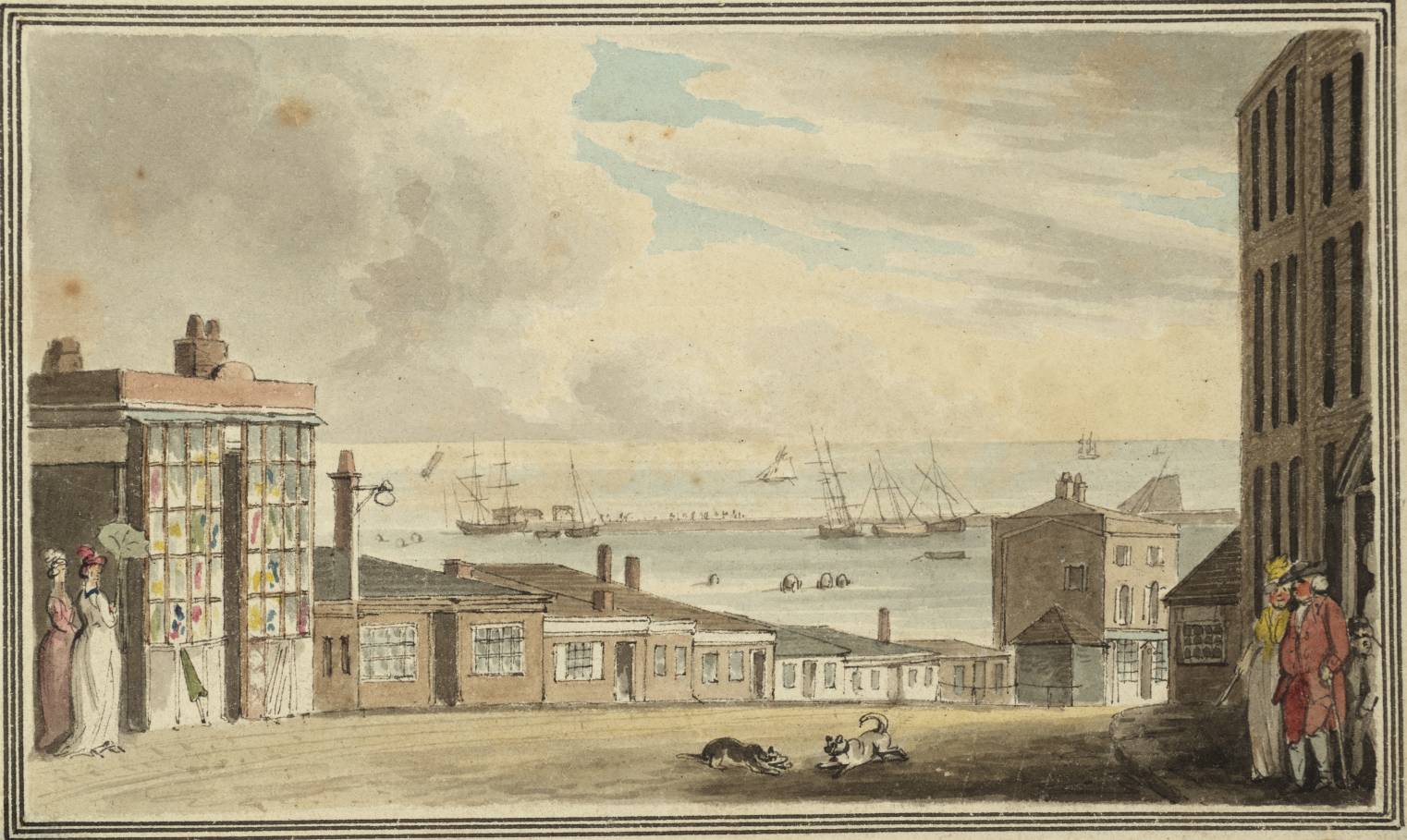
Margate High Street, c.1789?
Watercolour and ink on paper, 114 x 189 mm [Margate Church w/cl 308 x 435; well over four times the size]
Tate, London.
Purchased as part of the Oppé Collection with assistance from the National Lottery through the Heritage Lottery Fund 1996
https://www.tate.org.uk/art/artworks/turner-part-of-high-street-margate-t10149
Before moving on from this juvenile work, we might pause to consider a watercolour showing the view down the High Street of Margate. It is approximately one quarter the size of the previous watercolours. It was bought for the Nation by the Tate 1996 as part of the collection of the great connoisseur of British watercolours, Paul Oppe. It is currently catalogued as by an artist of the name of ‘W.Turner’, and although the Tate’s online catalogue gives no dates, nor hint of further explanation, nor offers any grounds for the attribution, the implication appears to be that the said ‘W.Turner’ is not our man, nor indeed, boy.
It is frustrating that the Tate’s online catalogue does not give a more extended discussion of this work, nor is there any mention of it in the catalogue published by the Tate in 1988 when the Oppe collection was presented in exhibition. One suspects that Oppe bought the watercolour in the hopes that it was the work of young Master William, but the possibility has since been parked. On the whole, however, if the previous two watercolours can be by the thirteen years old Turner, then there seems no obvious reason that this could not also be.
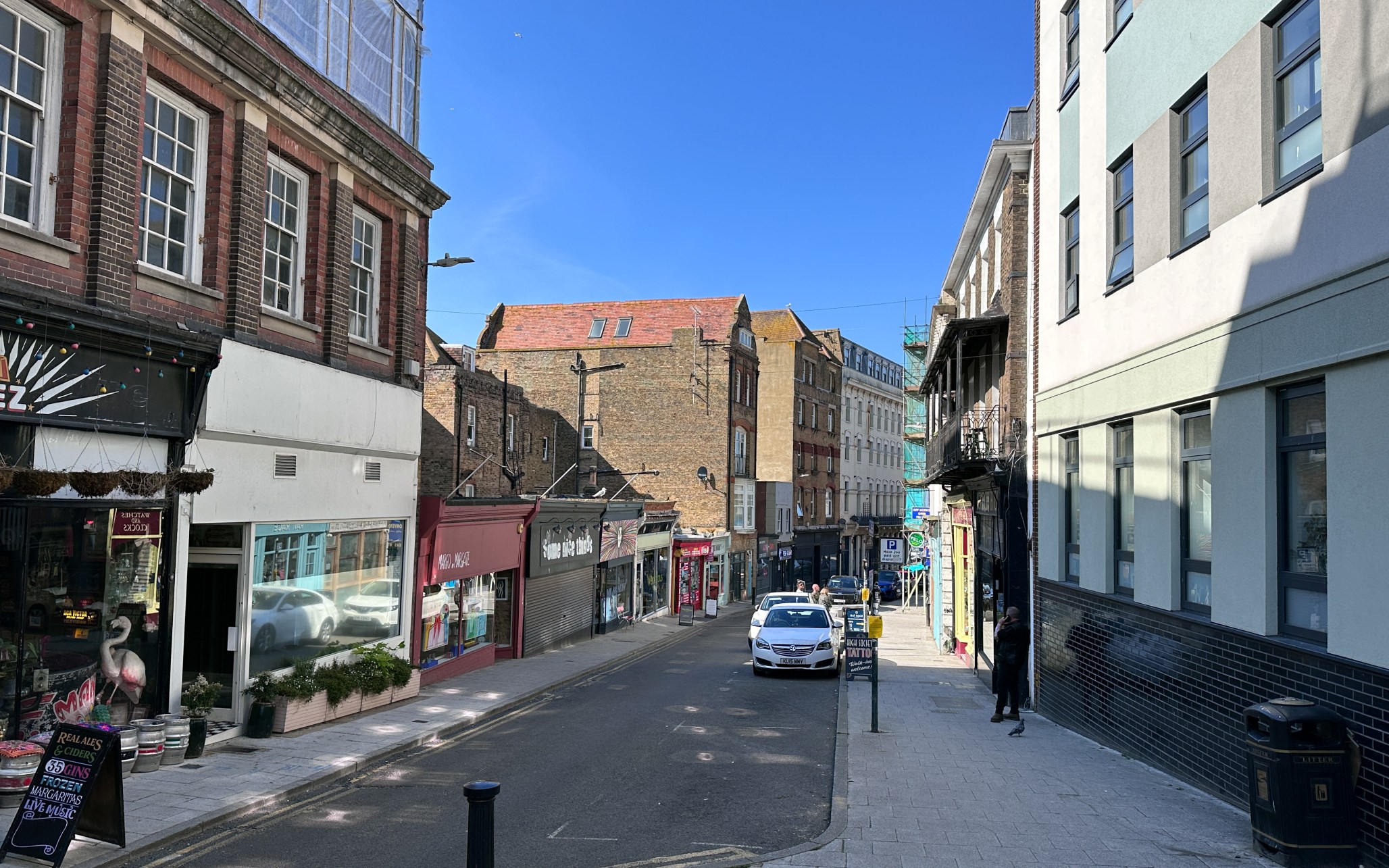
Photograph by Professor Emeritus David Hill taken 8 May 2026, 16.20
Though everything in sight has been redeveloped, the general scene is remarkably recognisable today. In the watercolour we look down the curve of the High Street with a row of single-storey bathing rooms on the left. These generally consisted of a waiting room at street level leading onto stairs down to the beach where horse-drawn bathing machines would be waiting. Some premises also had heated saltwater baths for those who might prefer not to brave the sea. At the end of the street on the right is Garner’s Library. This was built by William Garner in 1789, and served as reading and meeting rooms as well as hosting regular social and commercial events. There are four similar views reproduced on the History of Margate website, https://www.margatelocalhistory.co.uk/NewHotSpotViewer/EdmundsPics/High%20Street%20Lower.html
but these all date from about 1820 and later. Garner’s original building was rebuilt after 1808 but this watercolour certainly records its previous form. It is the only view of the High Street during this period that I have found and significant for that alone. The building is certainly Garner’s for Hall’s original building, which Garner rebuilt in 1789, was a much plainer and squatter affair, as it appears in Thomas Smith’s aquatint of Margate of 1786. Anthony Lee, Georgian Margate pp.94-5.
https://www.margatelocalhistory.co.uk/Pictures/Prints-London_Publishers-2.html
Garner’s building was complete by 1789, however, for it is shown at the left of an aquatint by J Sanders dated 18 November of that year.
https://www.margatelocalhistory.co.uk/Pictures/Prints-London_Publishers-2.html
That building appears to be the same as shown in the present watercolour, except seen from the other side. If Turner sent a school year in Margate aged thirteen, he would have left in the summer of 1789.
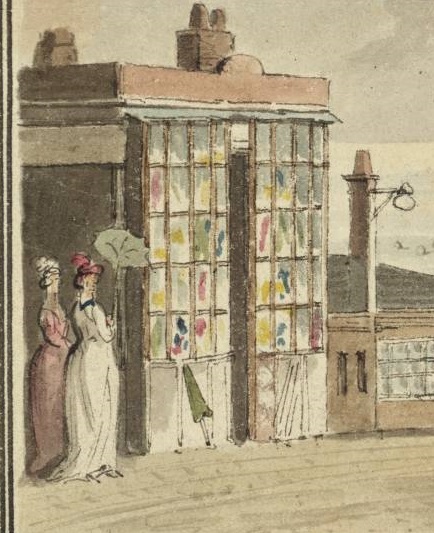
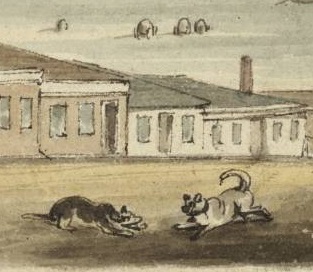
And just to push the line of possibility a little further, there is quite a lot in this watercolour that suggests a very promising hand and imagination. The dabs of colour suggesting ribbons and silk in the windows of the shop to the left are inventively suggestive; the figures socially apt, and the squabbling dogs in the street a lively detail, and a prefiguration of motifs that occur in several of Turner’s mature watercolours. The watercolour is nonetheless immature work; the perspective is less than rigid, and the drawing slightly awry, but the sky is thoughtful and suggests a developing feel for effects of weather.
In review, there is enough in the composition to be more precise than ‘W.Turner, 19th century’ as given by the current listing. From the form of Garner’s Library we can infer a date is no earlier than 1789 and no later than 1808. In any case the watercolour is of some significance to the visual history of Margate, and ought to be better known. It is surprisingly absent from Anthony Lee’s History of Margate site, and seems to deserve being known and shown in the town. That said, the Margate Museum is a bit of a sad story at the moment. The old town hall in which the Museum was housed from 1984 was shuttered and closed when we visited in May 2026, and looked seriously moribund. This is a shame. Margate old town is attractive and deeply rooted. Leaving an historical Town Hall empty at its heart seems rather neglectful. It looks very much as if Thanet Council has more pressing matters to deal with.
https://www.facebook.com/groups/1169498870176748/posts/1917709952022299/
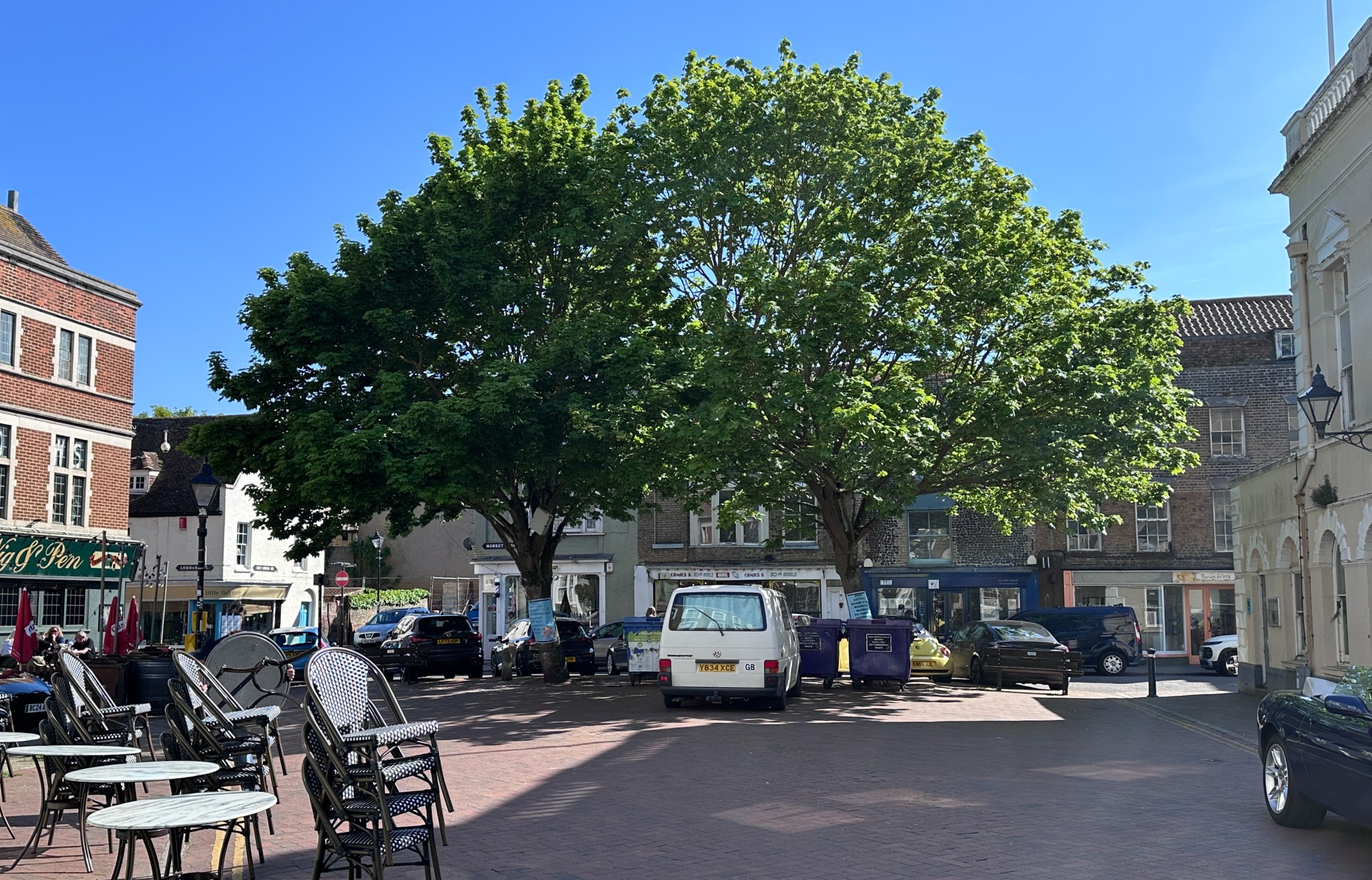
Photograph by Professor Emeritus David Hill taken 8 May 2026, 16.05
Next: Coming of Age and Royal Academician